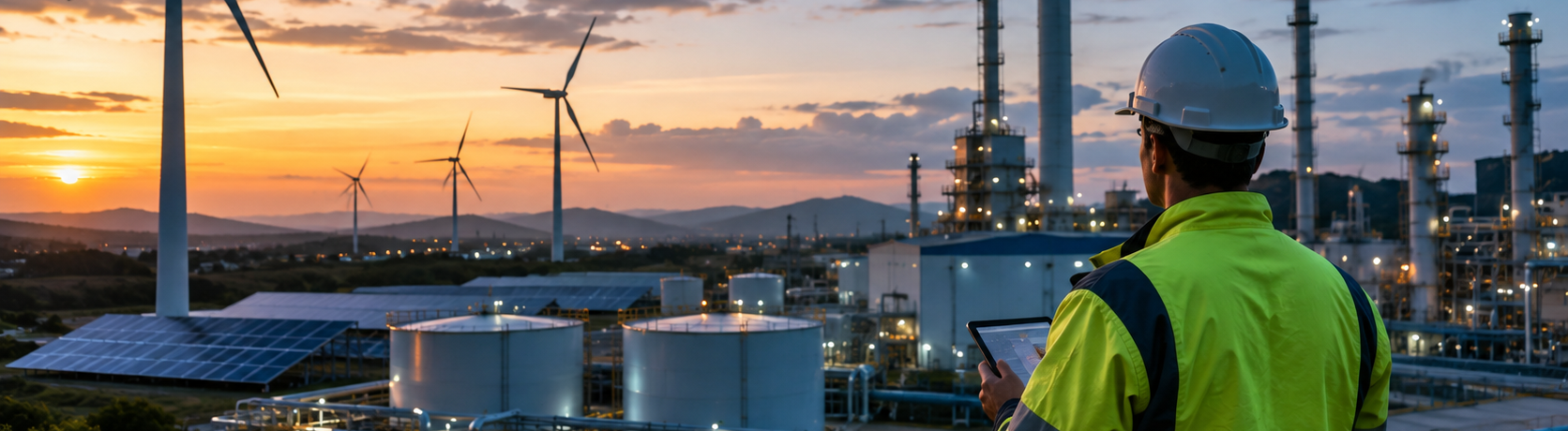

Energy industry leaders build their competitive position through long-term decisions.
The current context combines electrification, digitization, regulatory pressure, new technologies and a growing demand for critical infrastructure. Each of these variables requires a strategic vision capable of anticipating scenarios and allocating resources with economic sustainability criteria.
Decision speed becomes a competitive advantage
Energy investment cycles require years of planning and implementation. Each decision related to infrastructure, generation, storage, digitization or commercial expansion conditions the ability to compete over the next decade.
Fast-moving organizations strengthen their position in an environment where demand evolves faster than installed capacity. Strategic planning takes on a central role in prioritizing investment and reducing uncertainty.
Energy infrastructure incorporates new competitiveness criteria
The expansion of electricity networks, storage systems and the integration of renewable energy sources concentrate much of global investment. At the same time, sectors such as industry, electricity mobility and data centres increase their demand for reliable and flexible supply.
This scenario drives a profound transformation in the allocation of capital. Companies that develop capacities to operate in more complex energy ecosystems strengthen their resilience and expand their growth opportunities.
Digitization accelerates operational efficiency
Artificial intelligence, advanced analytics and real-time monitoring systems make it possible to optimize assets, anticipate failures and improve energy demand management. These tools increase operational availability and provide greater financial predictability.
The incorporation of these capacities represents a strategic decision directly linked to productivity and future profitability.
Strategic partnerships expand growth capacity
The development of energy projects involves manufacturers, operators, technological developers, financial institutions and regulatory bodies. Building strong partnerships facilitates access to innovation, financing and new markets.
Organizations that strengthen strategic relationships strengthen their capacity to implement larger-scale projects and respond more agile to changes in the environment.
Trade planning takes a leading role in the sector
Energy competitiveness also depends on the ability to identify more valuable segments, develop new markets and build differentiated proposals for industrial, corporate and institutional customers.
The business structure becomes relevant as a tool to generate predictability, diversify income and sustain expansion processes with cost-effectiveness criteria.
Postponed decisions generate increasing costs
Each deferred project involves a reduced capacity to capture future opportunities. Organizations that delay the incorporation of technology, the modernization of assets or the revision of their trade strategy face greater challenges in adapting to an increasingly dynamic market.
The competitiveness of the energy sector depends on consistent decisions, long-term vision and the ability to anticipate structural changes that are already being consolidated.
Las empresas que liderarán el mercado durante los próximos cinco años están construyendo hoy las capacidades que sostendrán su crecimiento, fortalecerán su posicionamiento y mejorarán su capacidad de respuesta frente a un entorno de transformación permanente.
