Infraestructura energética

Large investments with multi-year horizons: how to build a trade strategy for energy infrastructure projects

Energy infrastructure projects operate under a long-term logic.

Planning, financing, regulatory approvals and construction make up cycles that can be extended for five or more years before generating income. This scenario requires a trade structure aligned with the real speed of investment and market developments.

The expansion of electricity networks, developments in oil and gas, renewable energy plants and energy transport works reflect an international dynamic where capital allocation privileges projects with structural impact and the ability to generate value for decades. International bodies and market actors stress that investment in energy infrastructure remains one of the main drivers of economic growth and energy security.

Investment cycles define the pace of the trade strategy

Each infrastructure project goes through stages with different commercial needs. The early identification of opportunities, the construction of institutional relations, participation in tendering processes and technical support are part of a journey that demands continuity.

Energy sector supply companies have better results when they integrate the business strategy with their customers' investment schedule. This coordination facilitates the efficient allocation of resources, improves the preparation of proposals and strengthens positioning throughout the project cycle.

Trade management has a strategic role to play in anticipating future needs and maintaining linkages during long periods of evaluation and implementation.

Plan with five-year projected returns

Large-scale projects require present decisions with deferred results. This feature changes the way in which commercial investment, equipment development and capacity expansion is assessed.

The planning incorporates scenarios of economic evolution, availability of financing, regulatory changes, performance capacity and energy demand behaviour. Each variable influences project speed and opportunities for specialized suppliers.

Organizations that build forward-looking scenarios strengthen their capacity to sustain commercial investment over extended periods and generate greater consistency in decision-making.

Predictability strengthens competitiveness in long-term markets

Predictability is a strategic asset within the energy sector. Companies need to estimate project flows, identify investment priorities and understand the decisions that drive developers, operators, public bodies and investors.

This capacity is derived from commercial systems that integrate market intelligence, ongoing project monitoring, regulatory analysis and continuous update of the opportunity pipeline.

The result is an organization prepared to anticipate market movements, optimize commercial resources and reduce uncertainty associated with long investment cycles.

Indicators that guide trade management during infrastructure projects

The commercial director needs to incorporate specific metrics to assess performance within intensive investment markets.

The most relevant indicators include:

  • Total value of the pipeline segmented by project stage.
  • Probability of award according to maturity level of each opportunity.
  • Tiempo promedio del ciclo comercial desde la identificación hasta la contratación.
  • Participación en proyectos estratégicos dentro del mercado objetivo.
  • Evolución del volumen potencial de inversión por cliente o segmento.
  • Diversificación del pipeline entre sectores, regiones y tipos de infraestructura.
  • Conversión de relaciones institucionales en oportunidades comerciales concretas.

El seguimiento sistemático de estos indicadores facilita decisiones consistentes sobre asignación de recursos, incorporación de especialistas y desarrollo de nuevas capacidades comerciales.

Priorizar oportunidades cuando conviven múltiples proyectos de inversión

Los mercados energéticos suelen presentar varias iniciativas simultáneas con distintos niveles de avance. La priorización determina la calidad del crecimiento comercial.

La evaluación estratégica considera variables como tamaño del proyecto, probabilidad de ejecución, solidez financiera del desarrollador, estabilidad regulatoria, alineación con las capacidades de la empresa y potencial de relaciones de largo plazo.

Esta metodología permite concentrar esfuerzos sobre oportunidades con mayor impacto económico y mejorar la eficiencia de la inversión comercial.

La disciplina en la priorización también favorece la coordinación entre áreas comerciales, financieras y técnicas, fortaleciendo la capacidad de respuesta frente a proyectos de alta complejidad.

La gestión estratégica acompaña el crecimiento del sector energético

Las inversiones en infraestructura energética continuarán impulsando nuevos proyectos vinculados con redes eléctricas, transporte, almacenamiento, petróleo, gas y energías renovables. Este escenario incrementa la importancia de contar con estructuras comerciales preparadas para operar bajo horizontes de planificación extendidos, procesos de decisión complejos y mercados altamente competitivos.

Las organizaciones que desarrollan previsibilidad, fortalecen el análisis estratégico y alinean sus decisiones comerciales con los ciclos de inversión generan mejores condiciones para capturar oportunidades de crecimiento sostenido.

Slide

Evaluate a commercial diagnosis

Identify blocks and real opportunities for growth.


IA and energy

Artificial intelligence drives a new global career for energy

The growth of artificial intelligence is generating a profound transformation in energy markets.

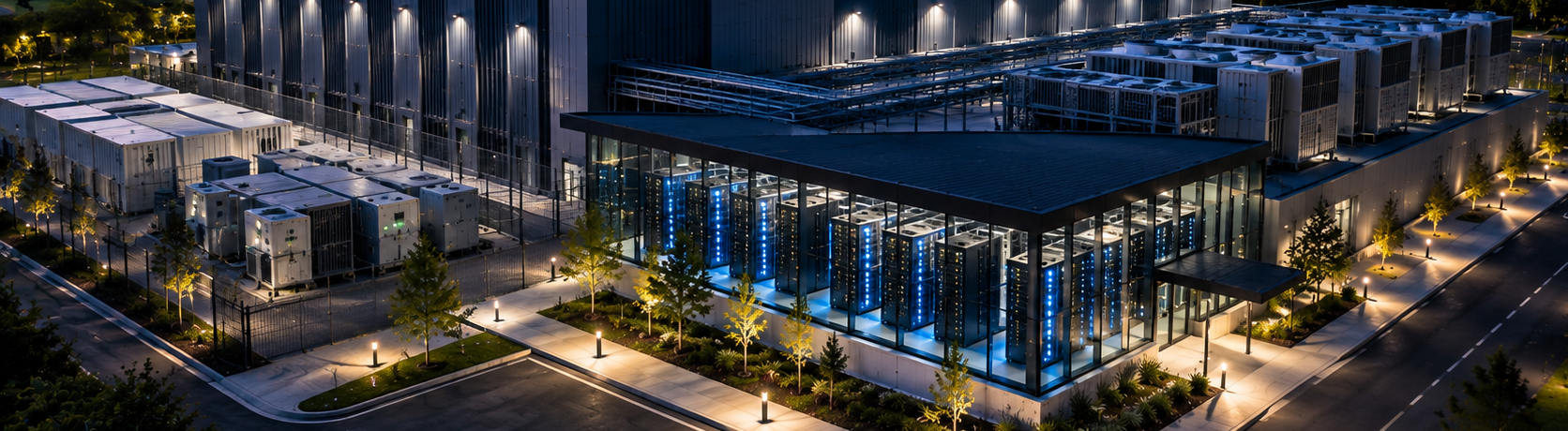
The expansion of data centres, digital infrastructure and intensive processing systems is increasing global electricity demand and accelerating investment in generation, networks and storage.

Data centres become large new energy users

Generative artificial intelligence entered an accelerated adoption stage. Technology companies, governments and multi-industry organizations are incorporating IA models to automate processes, develop products and increase productivity.

Behind that transformation is a variable that begins to gain prominence in the global energy agenda: electricity consumption.

Advanced models of artificial intelligence require enormous processing capabilities. Each new generation of data centres requires more computer power, more cooling and permanent availability of energy.

According to projections of the International Energy Agency (IEA), data centres will be one of the main drivers of growth in electricity demand over the next decade.

Energy is consolidated as a strategic factor to sustain digital expansion.

Energy infrastructure enters a new stage of investment

The global energy discussion incorporates a new priority: to ensure sufficient capacity to supply the growing demand associated with the digital economy.

Lead technology companies are signing long-term energy supply agreements to ensure operational stability and cost predictability.

At the same time, electricity companies, network operators and investment funds are accelerating projects related to:

  • Renewable generation.
  • Energy storage.
  • Extension of transmission networks.
  • Modernization of distribution systems.
  • Support infrastructure for data centres.

Energy availability is beginning to influence decisions to locate new technological investments.

Regions with access to competitive energy, network capacity and regulatory stability acquire a growing advantage in attracting projects linked to artificial intelligence.

The electrical network emerges as a strategic asset

The growth of electricity demand is shifting part of the focus from generation to networks.

In many developed markets, the times needed to connect new energy or technological projects create challenges for capacity expansion.

Investment in transmission and distribution becomes relevant within national energy plans.

This phenomenon is promoting opportunities to:

  • Electrical equipment manufacturers.
  • Infrastructure developers.
  • Network operators.
  • Companies specialized in energy digitization.
  • Suppliers of storage solutions.

The quality and availability of electricity infrastructure become factors that have a direct impact on economic competitiveness.

Energy and technology consolidate a new strategic relationship

Historically, the energy and technological sectors evolved with relatively independent dynamics.

The expansion of artificial intelligence is generating an ever-deeper convergence between the two ecosystems.

Large technologies are actively involved in energy projects, finance renewable developments and explore direct agreements with generators to ensure long-term supply.

Energy begins to be part of the corporate strategy of companies whose main business is linked to software, data and digital innovation.

This integration is changing the competitive dynamics of both sectors.

Latin America finds an opportunity for positioning

The region has relevant attributes to participate in this new phase of the global energy market.

The abundance of renewable resources, the availability of facilities for infrastructure expansion and the growth of investment in generation offer favourable conditions for attracting projects linked to digital economy and artificial intelligence.

Countries with stable regulatory frameworks, access to long-term financing and energy planning can capture a significant part of the investments that will seek new locations for data centres and technology operations.

The capacity to articulate energy policies, infrastructure and productive development will have a direct impact on regional competitiveness over the coming years.

Energy takes on a central role in the economy of artificial intelligence

The expansion of artificial intelligence is incorporating a new variable into the global business agenda: energy availability.

The capacity to generate, transport and manage electricity will be crucial to sustain the growth of digital infrastructure.

Energy companies, technological developers, investors and governments are entering a stage where energy, data and computer capacity are part of the same strategic equation.

The evolution of this trend will have a direct impact on investment, competitiveness and economic development in multiple industries.

Slide

Evaluate a commercial diagnosis

Identify blocks and real opportunities for growth.


Real Estate sustainable: energy efficiency redefines the value of real estate

The global real estate sector is undergoing a structural transformation driven by sustainability and energy efficiency

Investment funds, developers and operators are reconfiguring their strategies in a scenario where environmental, social and governance criteria (ESG) become central in decision-making.

International organizations such as the World Economic Forum and reports from consultants such as McKinsey highlight that buildings account for about 40% of global energy consumption and a significant proportion of carbon emissions. This context positions the real state as a key actor in the energy transition.

In this scenario, investment in sustainable projects is consolidated as a structural trend that impacts on both developed and Latin American markets.

Global capital for sustainable assets

Institutional investment flows show a growing preference for real estate assets with environmental certifications such as LEED or BREEAM. Sovereign funds, private equity and large developers prioritize projects that integrate energy efficiency, emission reduction and intelligent resource management.

This phenomenon responds to many factors:

  • More demanding environmental regulation in Europe and the United States.
  • Pressure of institutional investors for assets aligned with ESG criteria.
  • Differential valuation of sustainable properties.

The market begins to reflect a value premium on energy-efficient assets, with better occupancy rates and lower operating costs.

Technological innovation applied to the real estate

Digitization plays a central role in the evolution of the sector. Technologies such as the Internet of Things (IoT), artificial intelligence and energy management systems make it possible to optimize real-time consumption.

The intelligent buildings include:

  • Sensors for monitoring energy consumption.
  • Automation of air conditioning and lighting.
  • Predictive analysis for maintenance.

These solutions generate operational efficiencies and improve user experience, which directly affects the competitiveness of assets.

Regulatory changes and regulatory pressure

Environmental regulations are making strong progress in developed markets. The European Union is promoting regulations that require minimum energy efficiency standards for existing buildings and new developments.

In Latin America, the process is progressing gradually, with countries such as Chile, Colombia and Mexico incorporating regulatory frameworks aimed at sustainable construction.

This context promotes the need for the conversion of existing assets, creating opportunities for developers and specialized operators.

Latin America: an opportunity to expand

The Latin American market has a wide range of growth in real sustainable state. The combination of urbanization, demand for infrastructure and access to international financing creates favourable conditions for the development of efficient projects.

Cities such as Buenos Aires, São Paulo and Mexico City begin to integrate sustainable construction standards into premium corporate and residential developments.

Multilateral agencies and development banks play a key role through green financing and specific credit lines for sustainable projects.

Strategic perspective

Sustainability is placed as a structural axis in the real estate sector strategy.

Impact for companies
The companies in the sector incorporate ESG criteria as a central part of their value proposal. Energy efficiency improves operational margins and strengthens asset recovery.

Opportunities

  • Development of new projects with international certifications.
  • Conversion of existing assets.
  • Access to green financing.
  • Competitive differentiation in saturated markets.

Risks

  • Obsolescence of assets without sustainable standards.
  • Increased regulatory costs.
  • Pressure of institutional investors.

The market is moving towards a model where sustainability defines long-term competitiveness.

Investment in sustainable projects and energy efficiency is a new stage for the real global state. The integration of ESG-oriented technology, regulation and capital redefines the value of real estate assets and opens up strategic opportunities in Latin America.

Slide

Evaluate a commercial diagnosis

Identify blocks and real opportunities for growth.


The new geopolitics of natural gas: reconfiguration of global flows, actors and strategies

The global natural gas market is undergoing a structural transformation driven by geopolitical tensions, regulatory changes and an accelerated energy transition.

The war in Ukraine, the friction in the Middle East and the growing competition between energy powers have redefined trade flows, altering both prices and global supply strategies.

In this new scenario, natural gas —and particularly liquefied natural gas (LNG)— It is consolidated as a critical resource not only from an energy, but also from a geopolitical point of view.

The break of the traditional model

Historically, trade in natural gas was structured around long-term contracts and relatively stable pipeline networks. Europe was heavily dependent on Russian supply, while Asia consolidated its demand through strategic agreements with producers in the Middle East.

However, Russia's invasion of Ukraine marked a turning point. The drastic reduction in Russian supply to Europe forced an urgent reconfiguration of the market.

Europe accelerated the diversification of suppliers, increasing LNG imports from the United States, Qatar and Africa, while investing in regasification infrastructure.

The rise of LNG as global commodity

The liquefied natural gas has gained prominence as a flexible solution against the rigidity of the pipelines. Its maritime transport capacity allows to redirect flows according to demand, which introduces greater dynamism —but also volatility— on the market.

The United States is the world's leading LNG exporter, driven by its shale gas production. Qatar, for its part, is moving forward with ambitious expansion projects to consolidate its long-term leadership.

This change transforms gas into an increasingly global commodity, similar to oil, although with logistical and contractual particularities.

Asia and Europe: competition for supply

The growing demand in Asia, especially in China and India, intensifies competition for LNG shipments. This creates price and availability tensions, particularly in times of high seasonal demand.

Europe, which managed to stabilize its supply after the initial crisis, now faces the challenge of sustaining its energy security in a context of global competition.

The result is a more interconnected market, but also more sensitive to external shocks.

Impact of geopolitical conflicts

Tensions in the Middle East, a key region for energy production and transit, add an additional factor of uncertainty. Any disruption on strategic maritime routes can significantly affect global supply.

The energy policies of major powers —including sanctions, trade restrictions and subsidies— have a direct impact on market dynamics.

Strategic perspective

Opportunities

  • Expansion of LNG infrastructure investments (terminals, transport, storage).
  • Development of new export markets in Africa and Latin America.
  • Integration of gas as transition energy into energy matrices.
  • Innovation in liquefaction and energy efficiency technologies.

Risks

  • High price volatility by geopolitical factors.
  • Critical maritime routes unit.
  • Regulatory tensions in the framework of the energy transition.
  • Risk of over-investment in renewable acceleration scenarios.

Implications for Latin America

The region presents a double opportunity:

On the one hand, countries with gas resources such as Argentina (Vaca Muerta) or Brazil can position themselves as strategic suppliers in the global market.

On the other hand, the need for clear infrastructure and regulatory frameworks will be critical to attracting investment and scaling up its participation.

The challenge is to balance gas development as a strategic asset with decarbonization commitments.

Strategic keys for companies

  • Diversify supply sources and contracts.
  • Incorporate geopolitical intelligence into decision-making.
  • Investing in flexible infrastructure (LNG).
  • Assess scenarios of energy transition and future regulation.
  • Develop energy risk management capacities.

The reconfiguration of the natural gas market reflects a profound change in the global energy balance. Beyond geopolitical conjunctures, the sector is moving towards a more flexible, interconnected and competitive model, where adaptive capacity will be key to capturing value.

In this context, understanding global dynamics and anticipating scenarios becomes a strategic differential for energy companies.

Slide

Evaluate a commercial diagnosis

Identify blocks and real opportunities for growth.