Archivo: 30 marzo, 2026

Streaming: consolidation, scale and the challenge of profitability in the new stage of digital entertainment

The streaming industry is going through a new stage of maturity marked by structural change: user growth is no longer sufficient to sustain the business.

After years of accelerated expansion, the main global platforms face increasing pressure to improve their profitability, in a context of intense competition, high content costs and more price-sensitive consumers.

Recent reports from consultants such as Deloitte and media analysis such as Financial Times agree that the sector is moving from a "growth at any cost" logic to a model focused on efficiency, monetization and consolidation.

From explosive growth to financial discipline

Over the last decade, streaming was the main engine of transformation in the audiovisual sector. Global platforms invested billions of dollars in original production to capture and retain subscribers.

However, this model begins to show limits:

  • Saturation of key markets such as the United States and Europe.
  • Sustained increase in production costs.
  • Increased user rotation.
  • Investor pressure for sustainable financial performance.

As a result, companies are prioritizing profitability over accelerated growth, adjusting their cost structures and redefining their content strategies.

Competitive consolidation and reconfiguration

One of the most visible phenomena is the consolidation of the sector. Mergers, acquisitions and strategic alliances are becoming increasingly frequent in response to the need for scale.

This process responds to several factors:

  • Economies of scale in production and distribution.
  • Optimization of content catalogues.
  • Reduction of operational costs.
  • Increased bargaining power against producers and advertisers.

At the same time, there is a polarization of the market:

  • Large global platforms with massive investment capacity.
  • Nicho players who bet on specialized content.

This scenario reduces the space for intermediate actors, increasing competitiveness.

New monetization models

In the face of pressure on subscription revenue, platforms are diversifying their monetization sources.

Among the main emerging strategies:

1. Advertising plans (hybrid AVOD)
The launch of cheaper versions with ads allows to expand the user base and capture advertising revenues, replicating traditional media models with digital segmentation capabilities.

2. Price increase and user segmentation
The platforms adjust rates and offer different service levels, seeking to maximize average user income (ARPU).

3. Account-sharing control
Measures to limit account sharing seek to convert informal users into paid subscribers.

4. Content licensing
Some companies are reopening the sale of content to third parties as a way to generate additional income.

Content: between differentiation and efficiency

Content remains the main competitive factor, but the strategy is changing.

Instead of betting exclusively on volume, companies prioritize:

  • Productions with higher expected return.
  • Consolidated franchises.
  • Local content with regional potential.
  • Use of data to guide creative decisions.

In turn, artificial intelligence begins to play an increasing role in production, editing and recommendation processes, which could reduce costs in the medium term.

Strategic perspective

The consolidation of streaming marks a turning point for the media and entertainment industry.

Implications for companies

  • Need to scale or specialize.
  • Greater discipline in capital allocation.
  • Integration of hybrid monetization models.
  • Intensive use of data for strategic decisions.

Opportunities

  • Expansion in emerging markets with less penetration.
  • Development of multiplatform ecosystems.
  • Innovation in formats and user experiences.
  • Partnerships between telecommunications and content platforms.

Risks

  • Consumer saturation and subscriptions fatigue.
  • Cost increase without proportional return.
  • One-time success unit.
  • Regulatory changes in key markets.

In Latin America, the scenario has particularities: high price sensitivity, growth of digital consumption and opportunities in local production. This places the region as a strategic space for expansion, although with challenges in monetization.

The streaming business enters a stage where scale, efficiency and income diversification will be decisive. Profitability is no longer an option, but a necessary condition for sustaining growth in an increasingly competitive market.


Slide

Evaluate a commercial diagnosis

Identify blocks and real opportunities for growth.


The new geopolitics of natural gas: reconfiguration of global flows, actors and strategies

The global natural gas market is undergoing a structural transformation driven by geopolitical tensions, regulatory changes and an accelerated energy transition.

The war in Ukraine, the friction in the Middle East and the growing competition between energy powers have redefined trade flows, altering both prices and global supply strategies.

In this new scenario, natural gas —and particularly liquefied natural gas (LNG)— It is consolidated as a critical resource not only from an energy, but also from a geopolitical point of view.

The break of the traditional model

Historically, trade in natural gas was structured around long-term contracts and relatively stable pipeline networks. Europe was heavily dependent on Russian supply, while Asia consolidated its demand through strategic agreements with producers in the Middle East.

However, Russia's invasion of Ukraine marked a turning point. The drastic reduction in Russian supply to Europe forced an urgent reconfiguration of the market.

Europe accelerated the diversification of suppliers, increasing LNG imports from the United States, Qatar and Africa, while investing in regasification infrastructure.

The rise of LNG as global commodity

The liquefied natural gas has gained prominence as a flexible solution against the rigidity of the pipelines. Its maritime transport capacity allows to redirect flows according to demand, which introduces greater dynamism —but also volatility— on the market.

The United States is the world's leading LNG exporter, driven by its shale gas production. Qatar, for its part, is moving forward with ambitious expansion projects to consolidate its long-term leadership.

This change transforms gas into an increasingly global commodity, similar to oil, although with logistical and contractual particularities.

Asia and Europe: competition for supply

The growing demand in Asia, especially in China and India, intensifies competition for LNG shipments. This creates price and availability tensions, particularly in times of high seasonal demand.

Europe, which managed to stabilize its supply after the initial crisis, now faces the challenge of sustaining its energy security in a context of global competition.

The result is a more interconnected market, but also more sensitive to external shocks.

Impact of geopolitical conflicts

Tensions in the Middle East, a key region for energy production and transit, add an additional factor of uncertainty. Any disruption on strategic maritime routes can significantly affect global supply.

The energy policies of major powers —including sanctions, trade restrictions and subsidies— have a direct impact on market dynamics.

Strategic perspective

Opportunities

  • Expansion of LNG infrastructure investments (terminals, transport, storage).
  • Development of new export markets in Africa and Latin America.
  • Integration of gas as transition energy into energy matrices.
  • Innovation in liquefaction and energy efficiency technologies.

Risks

  • High price volatility by geopolitical factors.
  • Critical maritime routes unit.
  • Regulatory tensions in the framework of the energy transition.
  • Risk of over-investment in renewable acceleration scenarios.

Implications for Latin America

The region presents a double opportunity:

On the one hand, countries with gas resources such as Argentina (Vaca Muerta) or Brazil can position themselves as strategic suppliers in the global market.

On the other hand, the need for clear infrastructure and regulatory frameworks will be critical to attracting investment and scaling up its participation.

The challenge is to balance gas development as a strategic asset with decarbonization commitments.

Strategic keys for companies

  • Diversify supply sources and contracts.
  • Incorporate geopolitical intelligence into decision-making.
  • Investing in flexible infrastructure (LNG).
  • Assess scenarios of energy transition and future regulation.
  • Develop energy risk management capacities.

The reconfiguration of the natural gas market reflects a profound change in the global energy balance. Beyond geopolitical conjunctures, the sector is moving towards a more flexible, interconnected and competitive model, where adaptive capacity will be key to capturing value.

In this context, understanding global dynamics and anticipating scenarios becomes a strategic differential for energy companies.

Slide

Evaluate a commercial diagnosis

Identify blocks and real opportunities for growth.


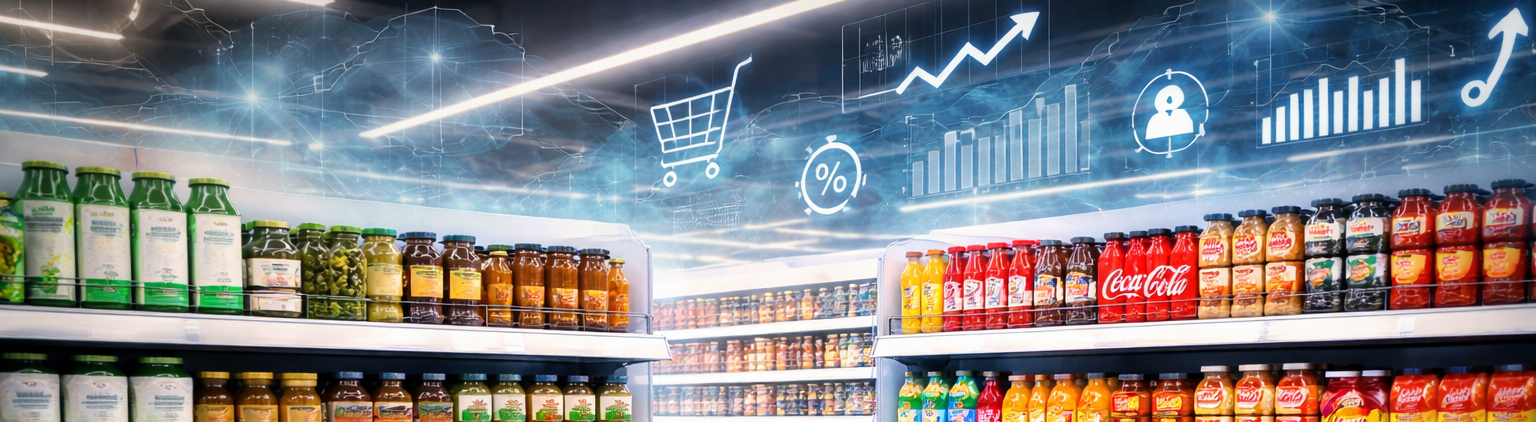
The rise of its own brands and dynamic pricing redefines the competition in retail

Large retail chains are strengthening their own product portfolio while incorporating data analysis and artificial intelligence technologies to adjust real-time prices.

In recent years, the consumption and retail has undergone a profound transformation driven by changes in consumer behaviour, the digitization of trade and inflationary pressure in many markets. In this context, two strategic trends are beginning to be consolidated at the global level: growth of own brands (private label) and the increasingly sophisticated adoption of dynamic pricing strategies.

Large retail chains are strengthening their own product portfolio while incorporating data analysis and artificial intelligence technologies to adjust real-time prices. This double movement is not only aimed at improving margins, but also at strengthening direct relations with the consumer and increasing competitiveness against traditional brands.

The structural growth of own brands

The own markstraditionally associated with low-cost products, they are moving towards higher value-added proposals. According to various sectoral analyses published by international consultants and data platforms such as Statista and McKinsey, retail chains are expanding these lines to premium, healthy or sustainable segments.

This phenomenon responds to several factors:

  • Increased price sensitivity by consumers in inflationary contexts.
  • Greater margin control for the retailers.
  • Strategic differentiation against competitors.

Global retail companies have shown that their own brands can become a strategic asset. In developed markets, these lines already represent a significant portion of sales in categories such as food, cleaning products and personal care.

In addition, the chains use these marks to building identity and fidelity, something particularly relevant in environments where e-commerce and price comparison have reduced traditional loyalty to industrial brands.

The sophistication of dynamic pricing

In parallel, the use of dynamic pricing is rapidly expanding in the retail sector. This strategy consists of flexible price adjustment based on multiple variables:

  • Demand in real time.
  • Consumer behaviour.
  • Inventories available.
  • Competition prices.
  • Macroeconomic conditions.

The availability of large volumes of data and the use of advanced algorithms allow companies to optimize their price strategy with a precision that was unthinkable just a decade ago.

Originally associated with sectors such as air transport or hotel, dynamic pricing is beginning to be implemented in supermarkets, electronic commerce and omnicanal retail chains.

According to a number of reports from the technology sector and e-commerce, the adoption of advanced analytical and artificial intelligence It can improve both profitability and inventory rotation while better adapting supply to consumer expectations.

The convergence of both strategies

The combination of own marks and dynamic pricing opens up a new strategic dimension for the retail sector.

By directly controlling product development and price positioning, retailers can respond more quickly to market changes. This allows:

  • Adjusting prices based on demand elasticity.
  • Positioning own products in front of leading brands.
  • Optimize margins in key categories.
  • React quickly to movements of competition.

In practice, this transforms the retailers into real brand portfolio managerswith a growing capacity to influence the value chain.

Implications for traditional brands

This scenario also poses important challenges for traditional manufacturers. As retailers strengthen their own brands, industrial brands face increased pressure in terms of price, positioning and differentiation.

To maintain competitiveness, many companies are strengthening strategies based on:

  • Product innovation.
  • Construction of brand.
  • Premium value proposals.
  • Omnicanal experiences.

In parallel, competition for gondola space and visibility on e-commerce platforms is intensified, where algorithms and data management also influence product exposure.

Impacts in Latin America

Although the development of these strategies has been more rapid in Europe and North America, the trend is beginning to be consolidated. Latin America.

Several regional retailers are investing in:

  • Development of own brands.
  • E-commerce platforms.
  • Price analysis tools.
  • Advanced inventory management systems.

The growing digitization of trade and competitive pressure on urban markets are accelerating the adoption of these practices.

For industry companies in the region, the capacity to integrate data, technology and trade strategy It will be increasingly decisive to sustain competitiveness.

Strategic perspective

The progress of the own brands and the dynamic pricing reflects a deeper transformation of the retail sector: the step towards data-based business models and strategic supply control.

In this new environment, companies will have to develop capacities in three key dimensions:

1. Advanced analysis
Price and portfolio management requires intensive use of predictive data and models.

2. Brand development
The own brands evolve towards proposals with distinct identity, positioning and narrative.

3. omnicanal integration
Coherence between physical stores, e-commerce and digital platforms will be key to implementing effective pricing strategies.

Companies that manage to integrate these capacities will be able to capture growth opportunities, improve their margins and strengthen their relationship with consumers.

The evolution of retail to more sophisticated brand and price management models reflects a process of structural transformation of the sector at global level. For companies, understanding these dynamics and anticipating their implications will be key to competing in increasingly dynamic and data-based markets.

Slide

Evaluate a commercial diagnosis

Identify blocks and real opportunities for growth.


Global agro-industry against new environmental regulations: how sustainability redefines value chains

Sustainability has become one of the most structural factors that is transforming global agro-industrial trade.

In recent years, governments and multilateral agencies have begun to implement stricter regulations related to traceability, emission reduction and ecosystem protection, with a direct impact on agricultural commodity exporting countries.

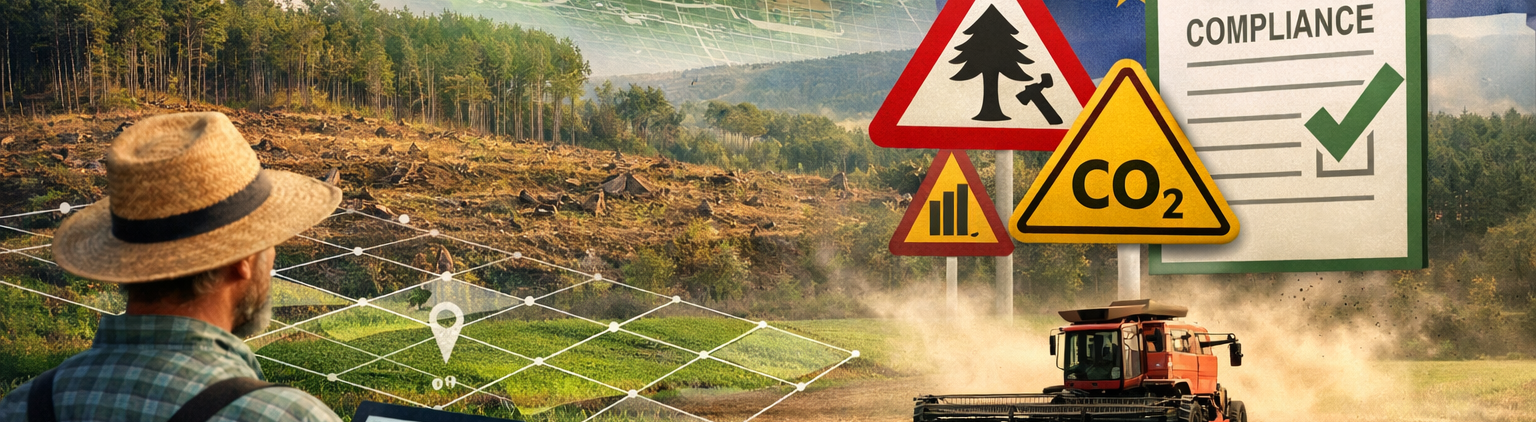
One of the most relevant examples is the new European Union regulation against imported deforestation, which requires companies to demonstrate that products such as soya, beef, coffee, cocoa or palm oil do not come from deforested areas after 2020.

This legislation, known as EUDR (European Union Deforestation Regulation), reflects a broader trend: large consumer markets start using environmental regulation as a tool for redefining international trade rules.

For agro-export economies in Latin America, this change represents both a challenge and a strategic opportunity.

Environmental regulation: the new competitive factor in agricultural trade

Historically, agro-industrial competitiveness was dominated by variables such as productivity, logistical costs or market access. However, sustainability is being consolidated as a new entry requirement for global trade.

According to World Economic Forum analysis and sectoral studies published by consultants such as McKinsey & Company, major importing markets are moving forward in three key regulatory dimensions:

1. Full traceability of production chains

Importers begin to require detailed information on the geographical origin of agricultural products, including:

  • Coordinates of the productive fields.
  • History of soil use.
  • Environmental certificates.
  • Compliance with labour standards.

This means that agro-exporting companies must integrate digital monitoring systems from the producer to the final consumer.

2. Carbon footprint reduction

Agroindustry accounts for about one quarter of global greenhouse gas emissions. For this reason, new regulations seek to promote:

  • regenerative agriculture.
  • Efficiency in fertilizer use.
  • Reduction of emissions in logistics and transport.

In parallel, voluntary carbon markets linked to the agricultural sector are expanded.

3. Protection of critical ecosystems

Combating deforestation became a regulatory priority for developed countries, especially in relation to products associated with agricultural expansion.

The European Anti-Deforestation Regulation shall apply to products from regions such as:

  • Amazon
  • Brazilian closed
  • Great South American Chaco

This change can significantly alter agricultural trade flows in the coming years.

Impact on Latin America

Latin America is one of the regions most exposed to this regulatory transformation due to its weight in global agri-food trade.

Countries such as Brazil, Argentina, Paraguay and Uruguay are central players in exports of soya, beef, maize and other agricultural commodities.

According to analysis of agencies such as the Inter-American Development Bank, the impact of these regulations can be manifested in three main dimensions.

1. Increased operational costs

The implementation of traceability, certification and environmental monitoring systems requires significant technological investments.

These include:

  • Digital production tracking platforms.
  • Soil use monitoring satellite systems.
  • Environmental audits.
  • International certificates.

For large exporting companies, these investments can be absorbed as part of the competitiveness strategy. However, for small producers the challenge is greater.

2. Reconfiguration of supply chains

Global agro-industrial companies are beginning to redesign their supply chains to reduce regulatory risks.

This may involve:

  • Prioritize suppliers with environmental certifications.
  • Concentrate purchases in regions at lower risk of deforestation.
  • Implement sustainable production contracts.

As a result, access to international markets could be increasingly dependent on environmental compliance.

3. New value added opportunities

Despite regulatory challenges, the transition to sustainable agricultural models also opens up new market opportunities.

Global consumers show a growing preference for products with environmental certifications, which drives segments such as:

  • Sustainable food.
  • Organic products.
  • regenerative agriculture.
  • Bioproducts of agricultural origin.

In this context, sustainability can become a competitive factor for Latin American exporters.

Technology and digitization: key tools for compliance with regulation

Adaptation to this new regulatory framework is accelerating the adoption of digital technologies in agro-industry.

Among the most relevant solutions are:

Precision agriculture
The use of sensors, drones and data analysis can optimize the use of inputs and reduce the environmental impact of production.

Satellite monitoring
Ground observation tools allow for soil use to be verified and changes to be detected in forest areas.

Blockchain for traceability
Some companies are experimenting with blockchain technologies to record the full course of agricultural products.

Digital certification platforms
These solutions make it possible to verify compliance with environmental standards more efficiently.

According to analysis published by Food and Agriculture Organization and World Bank studies, digitization will be a central factor in ensuring the transparency of agro-food chains in the next decade.

Strategic perspective for the sector

Regulatory pressure on sustainability is not a passing trend. On the contrary, it represents a structural transformation of global agri-food trade.

For companies in the agro-industrial sector, this scenario raises several strategic priorities:

Integrate sustainability into the business model
Companies that manage to incorporate sustainable practices across their value chain will have greater opportunities for access to international markets.

Investing in technology and traceability
Digitization will be essential to meet regulatory requirements and demonstrate the sustainable origin of production.

Strengthening the relationship with producers
Exporting companies should work more closely with producers to ensure compliance with environmental standards.

Develop new value proposals
Premium sustainable food markets offer opportunities to capture higher value added.

Sustainability is being consolidated as one of the main transformation axes of global agro-industrial trade. Stricter environmental regulations, new traceability requirements and increasingly conscious consumers are redefining market rules.

For the agro-exporting countries of Latin America, adapting to this new context will be key to maintaining their international competitiveness. Those companies that can integrate sustainability, technology and transparency into their production chains will be better placed to take advantage of the opportunities of the new agri-food economy.

Slide

Evaluate a commercial diagnosis

Identify blocks and real opportunities for growth.


Longevity and welfare

The business of living more and better: the global expansion of the longevity and well-being market

The ageing of the global population is redefining the structure of multiple industries.

As life expectancy increases, there is also a growing demand for solutions aimed at extend healthy years of lifethe development of a new economic ecosystem: the longevity economy.

According to analysis from international organizations and consultants such as World Economic Forum and McKinsey & Company, the global market linked to well-being, preventive health and healthy ageing is rapidly expanding, combining advances in biotechnology, preventive medicine, nutrition, fitness and digital technology.

In this context, the health and beauty it begins to integrate with industries such as technology, pharmaceutical and well-being, leading to new investment opportunities and business models focused on longevity.

A rapidly expanding market

The sustained increase in life expectancy is one of the structural factors that explain the expansion of the longevity market. According to data from the World Health Organization, by 2050 the world population over 60 years of age will double, exceeding 2 billion people.

This demographic change is driving a growing demand for solutions that will enable to delay biological ageing, prevent chronic diseases and improve quality of life at advanced ages.

Within this emerging market, multiple segments converge:

  • Preventive medicine
  • Supplements and functional nutrition
  • Biotechnology applied to ageing
  • Fitness and integral welfare
  • Scientific cosmetics or "beauty longevity"
  • Digital health platforms

According to studies cited by Global Wellness Institute, the global welfare economy currently exceeds the US$ 6 billion, and the segment of longevity and healthy ageing is one of the most growing within the sector.

Technological and biotechnological innovation

One of the main drivers of this market is the acceleration of scientific innovation applied to ageing.

In recent years, research in areas such as:

  • Genetic therapies
  • regenerative medicine
  • Analysis of biomarkers
  • Artificial intelligence applied to diagnosis
  • Personalized medicine

has made progress in understanding the biological processes that determine ageing.

Research centres, biotech companies and startups are developing therapies aimed at slow cell deterioration and extend healthy life, a field known as longevity biotech.

According to MIT Technology Review analysis, global investment in longevity technology companies has grown significantly over the past five years, attracting capital from capital venture funds, large pharmaceutical companies and sovereign funds.

This convergence between science, technology and health is creating a new segment within the health industry that combines medical research with consumer-oriented business models.

The transformation of the beauty sector

The impact of longevity is also redefining the global beauty market.

Traditionally focused on aesthetics, industry is evolving towards a more scientific approach based on skin health, cell biology and integral well-being.

Companies in the sector are investing in:

  • Biotechnology based cosmetics
  • Genetic analysis for treatment personalization
  • Dermatological health products
  • Integration with nutrition and supplements

This approach, known as beauty from within, reflects a trend towards products that combine aesthetics with health.

According to Statista's analysis, the cosmetics —products that combine nutritional supplements with aesthetic benefits— shows one of the most accelerated growth within the global beauty industry.

The role of digitization in welfare

Digital transformation is also accelerating the development of the longevity market.

Mobile applications, wearable devices and digital health platforms allow consumers to monitor key variables such as:

  • Dream
  • Physical activity
  • Nutrition
  • Health Biomarkers

Such tools are driving a more preventive approach to health, where users make data-based decisions about their well-being.

The convergence between technology and health is creating a new ecosystem in which technology companies, digital health startups and welfare companies compete to capture part of this emerging market.

Strategic perspective for enterprises

The expansion of the longevity economy presents relevant strategic opportunities for multiple industries.

The main opportunities include:

1. Development of new market segments
Longevity is creating new categories of products and services aimed at older, but active, consumers with greater purchasing power.

2. Integration between health, technology and well-being
Companies that manage to integrate science, technology and consumer experience will have a competitive advantage in this market.

3. Innovation in business models
Well-being subscriptions, personalized health platforms and long-term clinics begin to appear as new business formats.

4. Market expansion in emerging economies
Although developed markets lead innovation, Latin America and Asia represent opportunities for growth due to demographic change and the increase in the middle class.

However, there are also relevant challenges:

  • Health regulation.
  • Scientific validation of products.
  • Pressure on health systems.
  • Growing competition between startups and big corporations.

The overall expansion of the longevity and well-being market reflects a structural transformation in the way societies address ageing.

Far from limited to a medical phenomenon, longevity is becoming a new axis of economic developmentwhich combines scientific innovation, well-being and business models focused on prevention.

In this context, companies operating in the health, beauty, technology and consumption sectors must adapt to an environment in which the quality of life and preventive health are consolidated as key demand factors.

Slide

Evaluate a commercial diagnosis

Identify blocks and real opportunities for growth.


Intelligent logistics

The logistics revolution has already begun: artificial intelligence, intelligent ports and new supply chains

Smart logistics redefines global supply chains.

Global logistics is one of the most profound transformations of recent decades. Factors such as accelerated digitization, port automation, geopolitical trade reorganization and artificial intelligence adoption are redefining the operation of supply chains.

According to analysis by consultants such as McKinsey and Deloitte, leading companies are migrating to data-based logistics models, with increasingly automated and resilient operations against global interruptions.

In this context, logistics is no longer an operational function to become a key strategic asset for business competitiveness.

Digitization and automation: the new logistics infrastructure

One of the most visible changes in the sector is the incorporation of digital technologies at all stages of the logistics chain.

The calls smart ports already use sensors, advanced analytics and artificial intelligence to optimize operations, reduce waiting times and improve the traceability of goods.

In turn, the distribution centres are incorporating:

  • Self-contained robots for order preparation.
  • Logistics management systems based on IA.
  • Real-time visibility platforms for inventories.

This process allows for improved operational efficiency, reduced logistical costs and increased capacity to respond to demand changes.

According to World Economic Forum reports, digitization of logistics could reduce global transport costs by more than 10% over the next decade.

Neartering and regionalization of trade

Another key phenomenon is the geographical reconfiguration of supply chains.

After the disruptions generated by the pandemic and trade tensions between large economies, many companies are reducing their dependence on extremely long supply chains.

This is driving strategies of nearwhere production approaches consumer markets.

In Latin America, this trend opens up relevant opportunities in sectors such as:

  • Manufacturing
  • Agroindustry
  • Port logistics
  • Industrial infrastructure

Countries in the region are beginning to position themselves as strategic nodes within the new global trade networks.

Artificial intelligence applied to logistics

Companies are using advanced algorithms to:

  • Optimize transport routes.
  • Anticipate interruptions in the supply chain.
  • Preview changes in demand.
  • Automate operational decisions.

Predictive analysis allows companies to react before problems occur, reducing operational risks and improving planning.

According to Harvard Business Review, organizations that integrate artificial intelligence into their logistics operations can improve operational efficiency by 15 to 20 per cent.

Investment in logistics infrastructure

There is a significant growth in investment in logistics infrastructure.

Investment funds and large global operators are allocating capital to:

  • Logistics parks.
  • Regional distribution hubs.
  • Port infrastructure.
  • Data centres linked to digital trade.

The growth of e-commerce is also driving the demand for distribution centres closer to large urban areas.

This convergence between digital trade, logistics and real estate it is creating new opportunities for investment and development in the sector.

Strategic perspective for enterprises

The evolution of logistics presents challenges and opportunities for companies in multiple productive sectors.

The most relevant strategic factors include:

1. Technological integration
Companies should invest in digital platforms that allow full visibility of their supply chains.

2. Diversification of suppliers
Reducing dependence on a single region or supplier becomes key to improving resilience.

3. Regional logistics infrastructure
The development of logistics hubs in Latin America can become a competitive factor for export industries.

4. Sectoral collaboration
Coordination between companies, governments and logistics operators will be crucial to developing more efficient logistics ecosystems.

In this new scenario, logistics is no longer a secondary function to become a central pillar of the business strategy.

Slide

Evaluate a commercial diagnosis

Identify blocks and real opportunities for growth.


IA - Enterprise infrastructure

Generative artificial intelligence: from technological experiment to business infrastructure

The new stage of artificial intelligence in companies.

In recent months, the artificial, generative intelligence has begun to be consolidated as a key technology infrastructure within organisations.

What was initially perceived as an experimental tool to generate texts, images or code is evolving into a platform that allows automate processes, optimize decisions and redesign operating models.

Companies in multiple sectors are incorporating these technologies in areas such as customer care, marketing, data analysis and software development. The result is a gradual transformation of the way organizations produce, manage information and make decisions.

Recent reports from McKinsey and Deloitte indicate that generative artificial intelligence could generate billions of dollars in global economic value in the next decade, promoting a new phase of digital transformation.

From pilot projects to operational integration

In the first stage, many companies adopted the artificial, generative intelligence through internal experiments and tests. Technology teams explored their capacities through pilot projects aimed at improving productivity or reducing costs in specific tasks.

However, recent market developments show a significant change: technology is beginning to be integrated into Central operating processes.

The main applications include:

  • Automation of customer care through intelligent assistants.
  • Content generation and marketing campaign optimization.
  • Development of software assisted by artificial intelligence.
  • Advanced data analysis for decision-making.
  • Optimization of internal processes.

This transition marks the step of technological experimentation towards a model in which artificial intelligence works as a cross-border digital infrastructure.

A global technological career

The advance of artificial intelligence is also driving a international technological competence.

The United States maintains a dominant position thanks to its technological ecosystem and the investment of large companies in artificial intelligence infrastructure. At the same time, China and the European Union have accelerated their investments in data centres, semiconductors and development of advanced models.

Global competition is concentrated in three key areas:

  • Development of large-scale artificial intelligence models.
  • Advanced computing infrastructure.
  • Access to large volumes of data.

In this context, artificial intelligence is becoming a strategic assets for both companies and national economies.

Regulation and technology governance

As artificial intelligence is integrated into business processes, the interest of regulators in establishing policy frameworks is also growing.

The European Union has made progress in developing the AI Act, one of the first regulatory frameworks to establish standards of transparency, safety and risk control in artificial intelligence systems.

Other countries are evaluating similar regulations, especially in areas related to:

  • Use of data.
  • Algoritmic sessions.
  • Responsibility for automated decisions.
  • Labour impact of automation.

For companies, regulatory development becomes a key factor in defining technology adoption strategies.

Strategic implications for enterprises

Generative artificial intelligence offers relevant opportunities to improve productivity and competitiveness, but its impact will depend to a large extent on how companies integrate technology into their business models.

The organizations that can capture the most value will be those that can combine technological innovation with organizational transformation.

This involves developing new capacities in:

  • Data analysis.
  • Process automation.
  • Technology management.
  • Specialized talent training.

At the same time, companies should manage risks associated with the adoption of artificial intelligence, including technology dependence, data security and regulatory compliance.

Perspective for Latin America

In Latin America, the adoption of artificial generative intelligence is still at an early stage, although some sectors are already exploring its potential.

Banking companies, retail, telecommunications and logistics are incorporating artificial intelligence tools to improve operational efficiency and analytical capacity.

The main regional challenge relates to the availability of technological infrastructure and specialized talent. However, the integration of these tools also represents an opportunity for modernising productive sectors and improving productivity.

A transformation that just begins

Generative artificial intelligence is redefining the role of technology within companies. More than a point tool, it begins to consolidate as a strategic platform capable of transforming business processes and models.

In this scenario, understanding global technological trends and anticipating their impact on the different production sectors will be increasingly relevant to organizations.

In Vipzus we accompany companies in key productive sectors to identify opportunities, strengthen their positioning and design growth strategies in increasingly competitive markets.

Slide

Evaluate a commercial diagnosis

Identify blocks and real opportunities for growth.