The new geopolitics of natural gas: reconfiguration of global flows, actors and strategies

The global natural gas market is undergoing a structural transformation driven by geopolitical tensions, regulatory changes and an accelerated energy transition.

The war in Ukraine, the friction in the Middle East and the growing competition between energy powers have redefined trade flows, altering both prices and global supply strategies.

In this new scenario, natural gas —and particularly liquefied natural gas (LNG)— It is consolidated as a critical resource not only from an energy, but also from a geopolitical point of view.

The break of the traditional model

Historically, trade in natural gas was structured around long-term contracts and relatively stable pipeline networks. Europe was heavily dependent on Russian supply, while Asia consolidated its demand through strategic agreements with producers in the Middle East.

However, Russia's invasion of Ukraine marked a turning point. The drastic reduction in Russian supply to Europe forced an urgent reconfiguration of the market.

Europe accelerated the diversification of suppliers, increasing LNG imports from the United States, Qatar and Africa, while investing in regasification infrastructure.

The rise of LNG as global commodity

The liquefied natural gas has gained prominence as a flexible solution against the rigidity of the pipelines. Its maritime transport capacity allows to redirect flows according to demand, which introduces greater dynamism —but also volatility— on the market.

The United States is the world's leading LNG exporter, driven by its shale gas production. Qatar, for its part, is moving forward with ambitious expansion projects to consolidate its long-term leadership.

This change transforms gas into an increasingly global commodity, similar to oil, although with logistical and contractual particularities.

Asia and Europe: competition for supply

The growing demand in Asia, especially in China and India, intensifies competition for LNG shipments. This creates price and availability tensions, particularly in times of high seasonal demand.

Europe, which managed to stabilize its supply after the initial crisis, now faces the challenge of sustaining its energy security in a context of global competition.

The result is a more interconnected market, but also more sensitive to external shocks.

Impact of geopolitical conflicts

Tensions in the Middle East, a key region for energy production and transit, add an additional factor of uncertainty. Any disruption on strategic maritime routes can significantly affect global supply.

The energy policies of major powers —including sanctions, trade restrictions and subsidies— have a direct impact on market dynamics.

Strategic perspective

Opportunities

  • Expansion of LNG infrastructure investments (terminals, transport, storage).
  • Development of new export markets in Africa and Latin America.
  • Integration of gas as transition energy into energy matrices.
  • Innovation in liquefaction and energy efficiency technologies.

Risks

  • High price volatility by geopolitical factors.
  • Critical maritime routes unit.
  • Regulatory tensions in the framework of the energy transition.
  • Risk of over-investment in renewable acceleration scenarios.

Implications for Latin America

The region presents a double opportunity:

On the one hand, countries with gas resources such as Argentina (Vaca Muerta) or Brazil can position themselves as strategic suppliers in the global market.

On the other hand, the need for clear infrastructure and regulatory frameworks will be critical to attracting investment and scaling up its participation.

The challenge is to balance gas development as a strategic asset with decarbonization commitments.

Strategic keys for companies

  • Diversify supply sources and contracts.
  • Incorporate geopolitical intelligence into decision-making.
  • Investing in flexible infrastructure (LNG).
  • Assess scenarios of energy transition and future regulation.
  • Develop energy risk management capacities.

The reconfiguration of the natural gas market reflects a profound change in the global energy balance. Beyond geopolitical conjunctures, the sector is moving towards a more flexible, interconnected and competitive model, where adaptive capacity will be key to capturing value.

In this context, understanding global dynamics and anticipating scenarios becomes a strategic differential for energy companies.

Slide

Evaluate a commercial diagnosis

Identify blocks and real opportunities for growth.


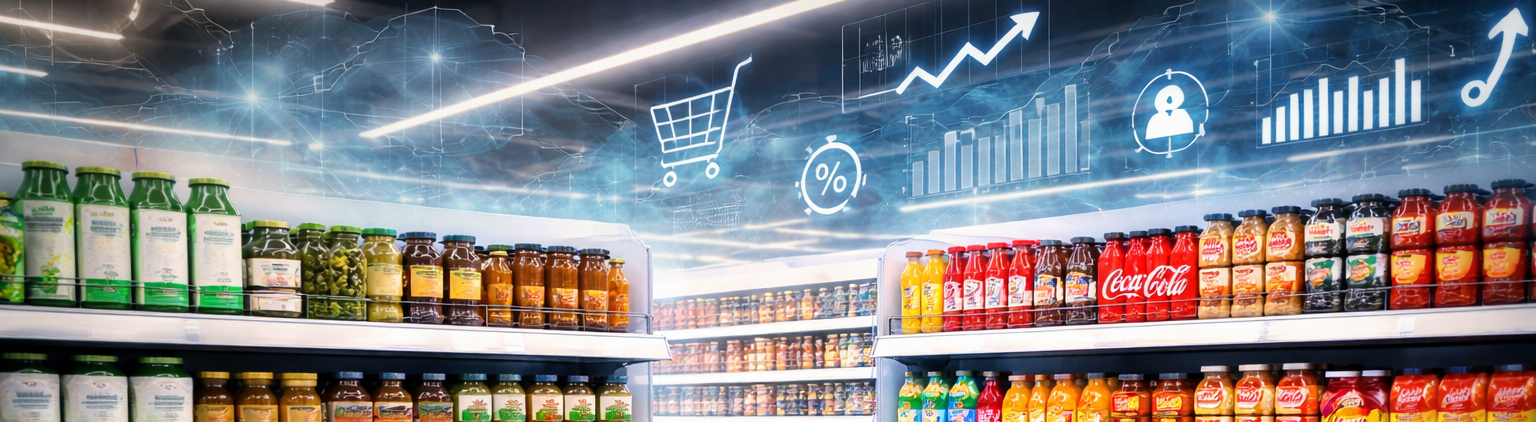
The rise of its own brands and dynamic pricing redefines the competition in retail

Large retail chains are strengthening their own product portfolio while incorporating data analysis and artificial intelligence technologies to adjust real-time prices.

In recent years, the consumption and retail has undergone a profound transformation driven by changes in consumer behaviour, the digitization of trade and inflationary pressure in many markets. In this context, two strategic trends are beginning to be consolidated at the global level: growth of own brands (private label) and the increasingly sophisticated adoption of dynamic pricing strategies.

Large retail chains are strengthening their own product portfolio while incorporating data analysis and artificial intelligence technologies to adjust real-time prices. This double movement is not only aimed at improving margins, but also at strengthening direct relations with the consumer and increasing competitiveness against traditional brands.

The structural growth of own brands

The own markstraditionally associated with low-cost products, they are moving towards higher value-added proposals. According to various sectoral analyses published by international consultants and data platforms such as Statista and McKinsey, retail chains are expanding these lines to premium, healthy or sustainable segments.

This phenomenon responds to several factors:

  • Increased price sensitivity by consumers in inflationary contexts.
  • Greater margin control for the retailers.
  • Strategic differentiation against competitors.

Global retail companies have shown that their own brands can become a strategic asset. In developed markets, these lines already represent a significant portion of sales in categories such as food, cleaning products and personal care.

In addition, the chains use these marks to building identity and fidelity, something particularly relevant in environments where e-commerce and price comparison have reduced traditional loyalty to industrial brands.

The sophistication of dynamic pricing

In parallel, the use of dynamic pricing is rapidly expanding in the retail sector. This strategy consists of flexible price adjustment based on multiple variables:

  • Demand in real time.
  • Consumer behaviour.
  • Inventories available.
  • Competition prices.
  • Macroeconomic conditions.

The availability of large volumes of data and the use of advanced algorithms allow companies to optimize their price strategy with a precision that was unthinkable just a decade ago.

Originally associated with sectors such as air transport or hotel, dynamic pricing is beginning to be implemented in supermarkets, electronic commerce and omnicanal retail chains.

According to a number of reports from the technology sector and e-commerce, the adoption of advanced analytical and artificial intelligence It can improve both profitability and inventory rotation while better adapting supply to consumer expectations.

The convergence of both strategies

The combination of own marks and dynamic pricing opens up a new strategic dimension for the retail sector.

By directly controlling product development and price positioning, retailers can respond more quickly to market changes. This allows:

  • Adjusting prices based on demand elasticity.
  • Positioning own products in front of leading brands.
  • Optimize margins in key categories.
  • React quickly to movements of competition.

In practice, this transforms the retailers into real brand portfolio managerswith a growing capacity to influence the value chain.

Implications for traditional brands

This scenario also poses important challenges for traditional manufacturers. As retailers strengthen their own brands, industrial brands face increased pressure in terms of price, positioning and differentiation.

To maintain competitiveness, many companies are strengthening strategies based on:

  • Product innovation.
  • Construction of brand.
  • Premium value proposals.
  • Omnicanal experiences.

In parallel, competition for gondola space and visibility on e-commerce platforms is intensified, where algorithms and data management also influence product exposure.

Impacts in Latin America

Although the development of these strategies has been more rapid in Europe and North America, the trend is beginning to be consolidated. Latin America.

Several regional retailers are investing in:

  • Development of own brands.
  • E-commerce platforms.
  • Price analysis tools.
  • Advanced inventory management systems.

The growing digitization of trade and competitive pressure on urban markets are accelerating the adoption of these practices.

For industry companies in the region, the capacity to integrate data, technology and trade strategy It will be increasingly decisive to sustain competitiveness.

Strategic perspective

The progress of the own brands and the dynamic pricing reflects a deeper transformation of the retail sector: the step towards data-based business models and strategic supply control.

In this new environment, companies will have to develop capacities in three key dimensions:

1. Advanced analysis
Price and portfolio management requires intensive use of predictive data and models.

2. Brand development
The own brands evolve towards proposals with distinct identity, positioning and narrative.

3. omnicanal integration
Coherence between physical stores, e-commerce and digital platforms will be key to implementing effective pricing strategies.

Companies that manage to integrate these capacities will be able to capture growth opportunities, improve their margins and strengthen their relationship with consumers.

The evolution of retail to more sophisticated brand and price management models reflects a process of structural transformation of the sector at global level. For companies, understanding these dynamics and anticipating their implications will be key to competing in increasingly dynamic and data-based markets.

Slide

Evaluate a commercial diagnosis

Identify blocks and real opportunities for growth.