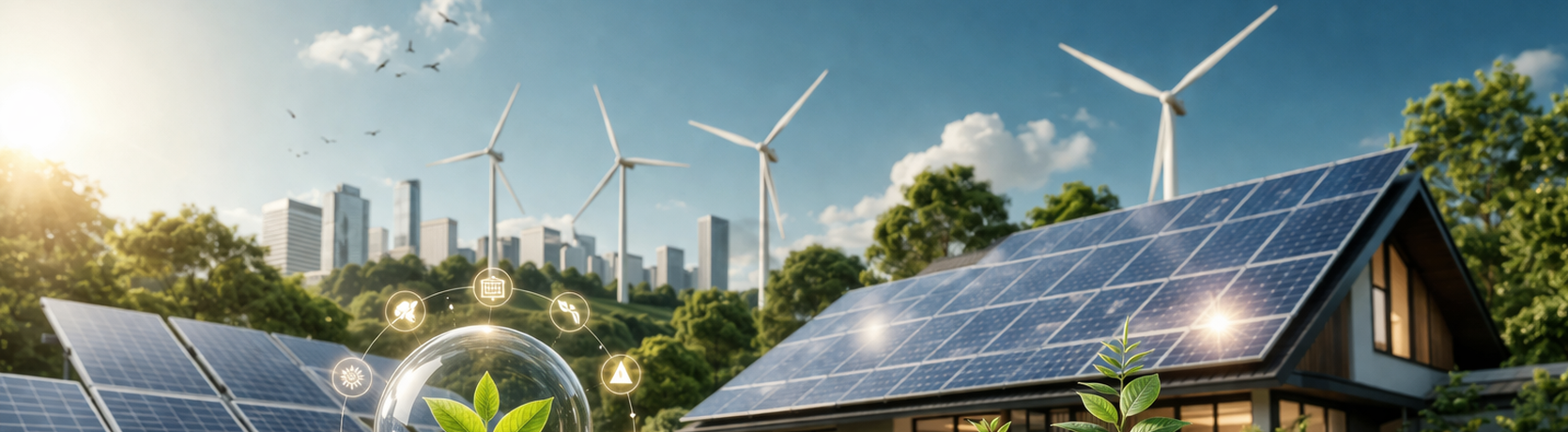
Real Estate sustainable: energy efficiency redefines the value of real estate

The global real estate sector is undergoing a structural transformation driven by sustainability and energy efficiency

Investment funds, developers and operators are reconfiguring their strategies in a scenario where environmental, social and governance criteria (ESG) become central in decision-making.

International organizations such as the World Economic Forum and reports from consultants such as McKinsey highlight that buildings account for about 40% of global energy consumption and a significant proportion of carbon emissions. This context positions the real state as a key actor in the energy transition.

In this scenario, investment in sustainable projects is consolidated as a structural trend that impacts on both developed and Latin American markets.

Global capital for sustainable assets

Institutional investment flows show a growing preference for real estate assets with environmental certifications such as LEED or BREEAM. Sovereign funds, private equity and large developers prioritize projects that integrate energy efficiency, emission reduction and intelligent resource management.

This phenomenon responds to many factors:

  • More demanding environmental regulation in Europe and the United States.
  • Pressure of institutional investors for assets aligned with ESG criteria.
  • Differential valuation of sustainable properties.

The market begins to reflect a value premium on energy-efficient assets, with better occupancy rates and lower operating costs.

Technological innovation applied to the real estate

Digitization plays a central role in the evolution of the sector. Technologies such as the Internet of Things (IoT), artificial intelligence and energy management systems make it possible to optimize real-time consumption.

The intelligent buildings include:

  • Sensors for monitoring energy consumption.
  • Automation of air conditioning and lighting.
  • Predictive analysis for maintenance.

These solutions generate operational efficiencies and improve user experience, which directly affects the competitiveness of assets.

Regulatory changes and regulatory pressure

Environmental regulations are making strong progress in developed markets. The European Union is promoting regulations that require minimum energy efficiency standards for existing buildings and new developments.

In Latin America, the process is progressing gradually, with countries such as Chile, Colombia and Mexico incorporating regulatory frameworks aimed at sustainable construction.

This context promotes the need for the conversion of existing assets, creating opportunities for developers and specialized operators.

Latin America: an opportunity to expand

The Latin American market has a wide range of growth in real sustainable state. The combination of urbanization, demand for infrastructure and access to international financing creates favourable conditions for the development of efficient projects.

Cities such as Buenos Aires, São Paulo and Mexico City begin to integrate sustainable construction standards into premium corporate and residential developments.

Multilateral agencies and development banks play a key role through green financing and specific credit lines for sustainable projects.

Strategic perspective

Sustainability is placed as a structural axis in the real estate sector strategy.

Impact for companies
The companies in the sector incorporate ESG criteria as a central part of their value proposal. Energy efficiency improves operational margins and strengthens asset recovery.

Opportunities

  • Development of new projects with international certifications.
  • Conversion of existing assets.
  • Access to green financing.
  • Competitive differentiation in saturated markets.

Risks

  • Obsolescence of assets without sustainable standards.
  • Increased regulatory costs.
  • Pressure of institutional investors.

The market is moving towards a model where sustainability defines long-term competitiveness.

Investment in sustainable projects and energy efficiency is a new stage for the real global state. The integration of ESG-oriented technology, regulation and capital redefines the value of real estate assets and opens up strategic opportunities in Latin America.

Slide

Evaluate a commercial diagnosis

Identify blocks and real opportunities for growth.


Global agro-industry against new environmental regulations: how sustainability redefines value chains

Sustainability has become one of the most structural factors that is transforming global agro-industrial trade.

In recent years, governments and multilateral agencies have begun to implement stricter regulations related to traceability, emission reduction and ecosystem protection, with a direct impact on agricultural commodity exporting countries.

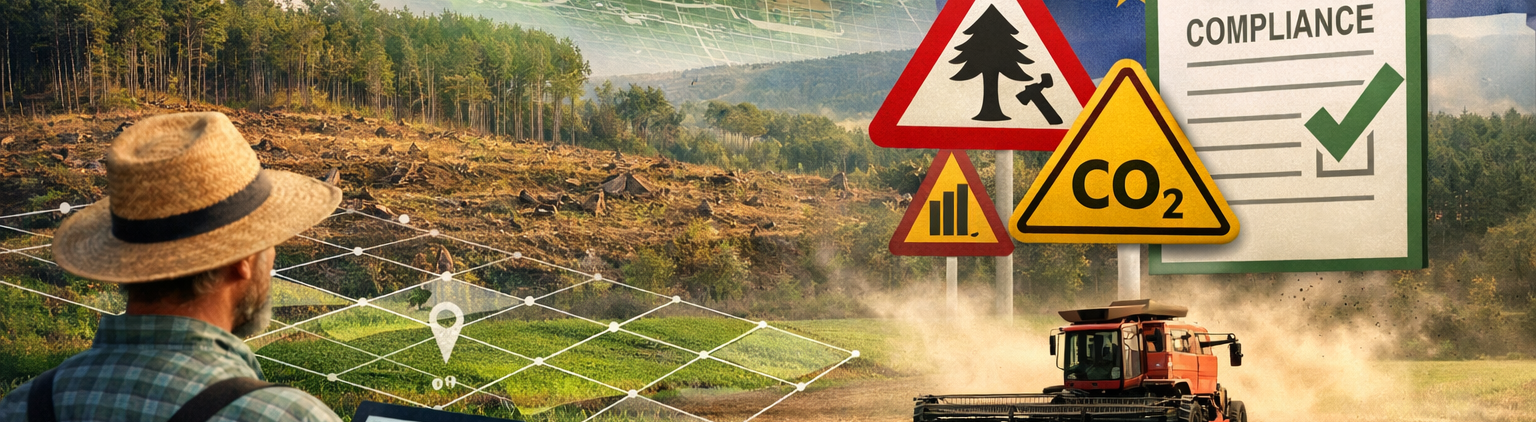
One of the most relevant examples is the new European Union regulation against imported deforestation, which requires companies to demonstrate that products such as soya, beef, coffee, cocoa or palm oil do not come from deforested areas after 2020.

This legislation, known as EUDR (European Union Deforestation Regulation), reflects a broader trend: large consumer markets start using environmental regulation as a tool for redefining international trade rules.

For agro-export economies in Latin America, this change represents both a challenge and a strategic opportunity.

Environmental regulation: the new competitive factor in agricultural trade

Historically, agro-industrial competitiveness was dominated by variables such as productivity, logistical costs or market access. However, sustainability is being consolidated as a new entry requirement for global trade.

According to World Economic Forum analysis and sectoral studies published by consultants such as McKinsey & Company, major importing markets are moving forward in three key regulatory dimensions:

1. Full traceability of production chains

Importers begin to require detailed information on the geographical origin of agricultural products, including:

  • Coordinates of the productive fields.
  • History of soil use.
  • Environmental certificates.
  • Compliance with labour standards.

This means that agro-exporting companies must integrate digital monitoring systems from the producer to the final consumer.

2. Carbon footprint reduction

Agroindustry accounts for about one quarter of global greenhouse gas emissions. For this reason, new regulations seek to promote:

  • regenerative agriculture.
  • Efficiency in fertilizer use.
  • Reduction of emissions in logistics and transport.

In parallel, voluntary carbon markets linked to the agricultural sector are expanded.

3. Protection of critical ecosystems

Combating deforestation became a regulatory priority for developed countries, especially in relation to products associated with agricultural expansion.

The European Anti-Deforestation Regulation shall apply to products from regions such as:

  • Amazon
  • Brazilian closed
  • Great South American Chaco

This change can significantly alter agricultural trade flows in the coming years.

Impact on Latin America

Latin America is one of the regions most exposed to this regulatory transformation due to its weight in global agri-food trade.

Countries such as Brazil, Argentina, Paraguay and Uruguay are central players in exports of soya, beef, maize and other agricultural commodities.

According to analysis of agencies such as the Inter-American Development Bank, the impact of these regulations can be manifested in three main dimensions.

1. Increased operational costs

The implementation of traceability, certification and environmental monitoring systems requires significant technological investments.

These include:

  • Digital production tracking platforms.
  • Soil use monitoring satellite systems.
  • Environmental audits.
  • International certificates.

For large exporting companies, these investments can be absorbed as part of the competitiveness strategy. However, for small producers the challenge is greater.

2. Reconfiguration of supply chains

Global agro-industrial companies are beginning to redesign their supply chains to reduce regulatory risks.

This may involve:

  • Prioritize suppliers with environmental certifications.
  • Concentrate purchases in regions at lower risk of deforestation.
  • Implement sustainable production contracts.

As a result, access to international markets could be increasingly dependent on environmental compliance.

3. New value added opportunities

Despite regulatory challenges, the transition to sustainable agricultural models also opens up new market opportunities.

Global consumers show a growing preference for products with environmental certifications, which drives segments such as:

  • Sustainable food.
  • Organic products.
  • regenerative agriculture.
  • Bioproducts of agricultural origin.

In this context, sustainability can become a competitive factor for Latin American exporters.

Technology and digitization: key tools for compliance with regulation

Adaptation to this new regulatory framework is accelerating the adoption of digital technologies in agro-industry.

Among the most relevant solutions are:

Precision agriculture
The use of sensors, drones and data analysis can optimize the use of inputs and reduce the environmental impact of production.

Satellite monitoring
Ground observation tools allow for soil use to be verified and changes to be detected in forest areas.

Blockchain for traceability
Some companies are experimenting with blockchain technologies to record the full course of agricultural products.

Digital certification platforms
These solutions make it possible to verify compliance with environmental standards more efficiently.

According to analysis published by Food and Agriculture Organization and World Bank studies, digitization will be a central factor in ensuring the transparency of agro-food chains in the next decade.

Strategic perspective for the sector

Regulatory pressure on sustainability is not a passing trend. On the contrary, it represents a structural transformation of global agri-food trade.

For companies in the agro-industrial sector, this scenario raises several strategic priorities:

Integrate sustainability into the business model
Companies that manage to incorporate sustainable practices across their value chain will have greater opportunities for access to international markets.

Investing in technology and traceability
Digitization will be essential to meet regulatory requirements and demonstrate the sustainable origin of production.

Strengthening the relationship with producers
Exporting companies should work more closely with producers to ensure compliance with environmental standards.

Develop new value proposals
Premium sustainable food markets offer opportunities to capture higher value added.

Sustainability is being consolidated as one of the main transformation axes of global agro-industrial trade. Stricter environmental regulations, new traceability requirements and increasingly conscious consumers are redefining market rules.

For the agro-exporting countries of Latin America, adapting to this new context will be key to maintaining their international competitiveness. Those companies that can integrate sustainability, technology and transparency into their production chains will be better placed to take advantage of the opportunities of the new agri-food economy.

Slide

Evaluate a commercial diagnosis

Identify blocks and real opportunities for growth.