Hydraulic energy: the strategic asset that redefines the global energy transition

The global energy transition is moving towards a more diversified matrix where the stability of the electrical system takes on a central role.

In that context, Hydraulic energy consolidates its positioning as one of the most relevant sources to ensure continuous generation, storage and regulation of networks. The latest developments in investment, technological innovation and energy policy put hydroelectricity at a new stage of strategic expansion.

At the global level, agencies such as the International Energy Agency (IEA) and the World Bank point out that hydropower accounts for about 15% of the world's electricity generation and more than 50% of renewable electricity. This leadership is sustained on three key attributes: stable generation capacity, operational flexibility and extended asset life.

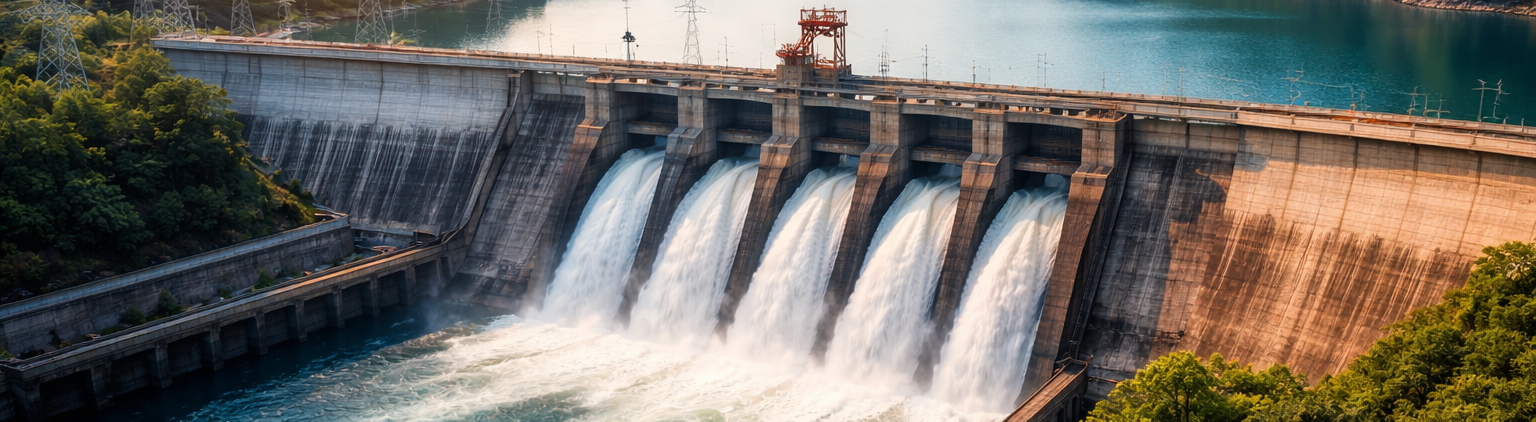
The current context introduces an additional dynamic. The acceleration of intermittent energies such as solar and wind drives the need for systems that bring stability. Hydroelectricity performs this function through reservoir plants and, in particular, through pumping storage systems (pumped storage), which allow the storage of energy at times of low demand and release it into consumption peaks.

Global expansion and new investment geography

China leads global hydroelectric development, concentrating more than 30% of installed capacity. Large-scale projects continue to expand their energy infrastructure with a focus on security of supply. India and South-East Asia also accelerate investments to sustain growth in electricity demand.

Latin America presents one of the greatest structural opportunities. Brazil, Colombia, Chile and Peru have significant water resources and an energy matrix where hydroelectricity already has a relevant weight. The strategic challenge is to modernize existing infrastructure, improve operational efficiency and manage climate risks.

Africa emerges as a region of high potential. The development of projects in the Congo and Nile basin opens up opportunities to expand electrification and attract international funding. Multilateral institutions promote these developments as part of sustainable growth agendas.

Technological innovation and digitization

The digitization of the hydroelectric sector is redefining the asset operation. Advanced artificial and analytical intelligence technologies make it possible to optimize the use of water resources, anticipate maintenance and maximize generation efficiency.

Real-time monitoring systems improve reservoir management against climate variability. This is critical in a scenario where extreme events, such as prolonged droughts or intense rains, have a direct impact on generation capacity.

Another relevant innovation is the development of hydroelectric microsystems. These solutions allow for decentralized generation in rural or industrial areas, expanding access to energy with less environmental impact and less infrastructure requirements.

Regulatory pressure and sustainability

The progress of the global environmental agenda redefines standards for hydroelectric projects. More stringent regulations require deeper environmental impact assessments, especially in relation to biodiversity, land use and local communities.

In Europe, green taxonomy sets specific criteria for classifying sustainable investments, which directly affects the financing of new projects. This framework promotes the development of projects with less environmental impact and greater efficiency in water use.

In emerging markets, international financial institutions make access to credit conditional on the adoption of environmental and social standards. This transforms the design and implementation of hydroelectric projects, incorporating sustainability criteria from early stages.

Structural risks: climate, financing and social leave

Climate change introduces a critical variable in hydroelectric planning. The variability in precipitation patterns affects the predictability of water resources, which directly affects the profitability of projects.

Funding also presents challenges. Hydroelectric projects require intensive capital investments and long recovery horizons. The global context of high interest rates increases the cost of capital and requires more sophisticated financial structures.

Social leave is consolidated as a determining factor. Local communities, environmental organisations and political actors influence the feasibility of projects. Stakeholders management takes on a strategic role at all stages of development.

Strategic perspective: the role of hydroelectricity in the energy system

Hydraulic energy plays a structural role in the energy transition. Its regulatory capacity makes this resource a key enabling force for the expansion of intermittent renewable energy.

Energy companies face a scenario where the optimization of existing assets generates competitive advantages. The modernisation of power plants, the incorporation of digital technology and integration with other renewable sources define market positioning.

Pump storage emerges as one of the most growing segments. This model allows the transformation of hydroelectric power plants into large-scale batteries, providing flexibility to the electrical system.

In Latin America, the strategic opportunity is focused on three areas: selective capacity expansion, operational efficiency and the development of climate-resilient infrastructure. The companies that integrate these factors into their strategy will be better positioned against the evolution of the global energy market.

Competitive dynamics and investment

Investment funds, multilateral banks and energy companies are increasing their exposure to the hydroelectric sector. The stability of cash flows and the relevance of the asset in the energy transition strengthen its attractiveness.

Interest on existing hydroelectric assets is growing in developed markets. The acquisition and modernization of power plants can capture value without taking on the risks associated with greenfield projects.

In parallel, vertical integration between generation, storage and distribution sets up new business models. This dynamic redefines competition in the energy sector.

Implications for companies and decision makers

The current scenario requires strategic decisions based on efficiency, sustainability and resilience. Energy companies are moving towards more flexible operating models, integrating multiple sources of generation.

Water resource management takes a strategic approach that combines technology, regulation and long-term planning. The ability to anticipate climate scenarios is translated into competitive advantage.

Positioning in international markets is also influenced by the ability to meet environmental standards and access sustainable financing.

Slide

Evaluate a commercial diagnosis

Identify blocks and real opportunities for growth.


The new geopolitics of natural gas: reconfiguration of global flows, actors and strategies

The global natural gas market is undergoing a structural transformation driven by geopolitical tensions, regulatory changes and an accelerated energy transition.

The war in Ukraine, the friction in the Middle East and the growing competition between energy powers have redefined trade flows, altering both prices and global supply strategies.

In this new scenario, natural gas —and particularly liquefied natural gas (LNG)— It is consolidated as a critical resource not only from an energy, but also from a geopolitical point of view.

The break of the traditional model

Historically, trade in natural gas was structured around long-term contracts and relatively stable pipeline networks. Europe was heavily dependent on Russian supply, while Asia consolidated its demand through strategic agreements with producers in the Middle East.

However, Russia's invasion of Ukraine marked a turning point. The drastic reduction in Russian supply to Europe forced an urgent reconfiguration of the market.

Europe accelerated the diversification of suppliers, increasing LNG imports from the United States, Qatar and Africa, while investing in regasification infrastructure.

The rise of LNG as global commodity

The liquefied natural gas has gained prominence as a flexible solution against the rigidity of the pipelines. Its maritime transport capacity allows to redirect flows according to demand, which introduces greater dynamism —but also volatility— on the market.

The United States is the world's leading LNG exporter, driven by its shale gas production. Qatar, for its part, is moving forward with ambitious expansion projects to consolidate its long-term leadership.

This change transforms gas into an increasingly global commodity, similar to oil, although with logistical and contractual particularities.

Asia and Europe: competition for supply

The growing demand in Asia, especially in China and India, intensifies competition for LNG shipments. This creates price and availability tensions, particularly in times of high seasonal demand.

Europe, which managed to stabilize its supply after the initial crisis, now faces the challenge of sustaining its energy security in a context of global competition.

The result is a more interconnected market, but also more sensitive to external shocks.

Impact of geopolitical conflicts

Tensions in the Middle East, a key region for energy production and transit, add an additional factor of uncertainty. Any disruption on strategic maritime routes can significantly affect global supply.

The energy policies of major powers —including sanctions, trade restrictions and subsidies— have a direct impact on market dynamics.

Strategic perspective

Opportunities

  • Expansion of LNG infrastructure investments (terminals, transport, storage).
  • Development of new export markets in Africa and Latin America.
  • Integration of gas as transition energy into energy matrices.
  • Innovation in liquefaction and energy efficiency technologies.

Risks

  • High price volatility by geopolitical factors.
  • Critical maritime routes unit.
  • Regulatory tensions in the framework of the energy transition.
  • Risk of over-investment in renewable acceleration scenarios.

Implications for Latin America

The region presents a double opportunity:

On the one hand, countries with gas resources such as Argentina (Vaca Muerta) or Brazil can position themselves as strategic suppliers in the global market.

On the other hand, the need for clear infrastructure and regulatory frameworks will be critical to attracting investment and scaling up its participation.

The challenge is to balance gas development as a strategic asset with decarbonization commitments.

Strategic keys for companies

  • Diversify supply sources and contracts.
  • Incorporate geopolitical intelligence into decision-making.
  • Investing in flexible infrastructure (LNG).
  • Assess scenarios of energy transition and future regulation.
  • Develop energy risk management capacities.

The reconfiguration of the natural gas market reflects a profound change in the global energy balance. Beyond geopolitical conjunctures, the sector is moving towards a more flexible, interconnected and competitive model, where adaptive capacity will be key to capturing value.

In this context, understanding global dynamics and anticipating scenarios becomes a strategic differential for energy companies.

Slide

Evaluate a commercial diagnosis

Identify blocks and real opportunities for growth.