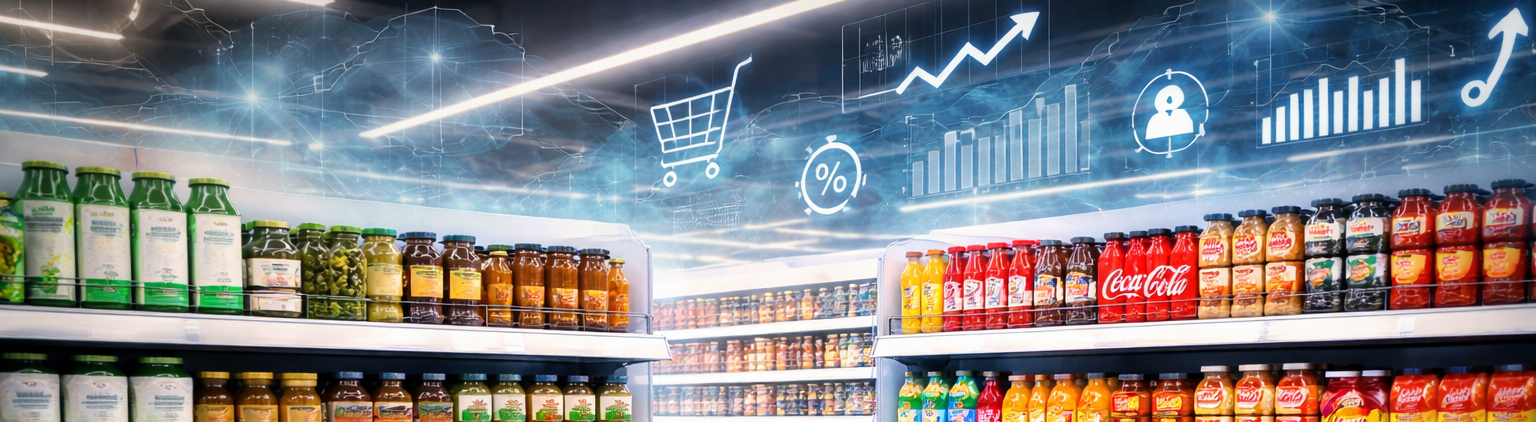
The rise of its own brands and dynamic pricing redefines the competition in retail

Large retail chains are strengthening their own product portfolio while incorporating data analysis and artificial intelligence technologies to adjust real-time prices.

In recent years, the consumption and retail has undergone a profound transformation driven by changes in consumer behaviour, the digitization of trade and inflationary pressure in many markets. In this context, two strategic trends are beginning to be consolidated at the global level: growth of own brands (private label) and the increasingly sophisticated adoption of dynamic pricing strategies.

Large retail chains are strengthening their own product portfolio while incorporating data analysis and artificial intelligence technologies to adjust real-time prices. This double movement is not only aimed at improving margins, but also at strengthening direct relations with the consumer and increasing competitiveness against traditional brands.

The structural growth of own brands

The own markstraditionally associated with low-cost products, they are moving towards higher value-added proposals. According to various sectoral analyses published by international consultants and data platforms such as Statista and McKinsey, retail chains are expanding these lines to premium, healthy or sustainable segments.

This phenomenon responds to several factors:

  • Increased price sensitivity by consumers in inflationary contexts.
  • Greater margin control for the retailers.
  • Strategic differentiation against competitors.

Global retail companies have shown that their own brands can become a strategic asset. In developed markets, these lines already represent a significant portion of sales in categories such as food, cleaning products and personal care.

In addition, the chains use these marks to building identity and fidelity, something particularly relevant in environments where e-commerce and price comparison have reduced traditional loyalty to industrial brands.

The sophistication of dynamic pricing

In parallel, the use of dynamic pricing is rapidly expanding in the retail sector. This strategy consists of flexible price adjustment based on multiple variables:

  • Demand in real time.
  • Consumer behaviour.
  • Inventories available.
  • Competition prices.
  • Macroeconomic conditions.

The availability of large volumes of data and the use of advanced algorithms allow companies to optimize their price strategy with a precision that was unthinkable just a decade ago.

Originally associated with sectors such as air transport or hotel, dynamic pricing is beginning to be implemented in supermarkets, electronic commerce and omnicanal retail chains.

According to a number of reports from the technology sector and e-commerce, the adoption of advanced analytical and artificial intelligence It can improve both profitability and inventory rotation while better adapting supply to consumer expectations.

The convergence of both strategies

The combination of own marks and dynamic pricing opens up a new strategic dimension for the retail sector.

By directly controlling product development and price positioning, retailers can respond more quickly to market changes. This allows:

  • Adjusting prices based on demand elasticity.
  • Positioning own products in front of leading brands.
  • Optimize margins in key categories.
  • React quickly to movements of competition.

In practice, this transforms the retailers into real brand portfolio managerswith a growing capacity to influence the value chain.

Implications for traditional brands

This scenario also poses important challenges for traditional manufacturers. As retailers strengthen their own brands, industrial brands face increased pressure in terms of price, positioning and differentiation.

To maintain competitiveness, many companies are strengthening strategies based on:

  • Product innovation.
  • Construction of brand.
  • Premium value proposals.
  • Omnicanal experiences.

In parallel, competition for gondola space and visibility on e-commerce platforms is intensified, where algorithms and data management also influence product exposure.

Impacts in Latin America

Although the development of these strategies has been more rapid in Europe and North America, the trend is beginning to be consolidated. Latin America.

Several regional retailers are investing in:

  • Development of own brands.
  • E-commerce platforms.
  • Price analysis tools.
  • Advanced inventory management systems.

The growing digitization of trade and competitive pressure on urban markets are accelerating the adoption of these practices.

For industry companies in the region, the capacity to integrate data, technology and trade strategy It will be increasingly decisive to sustain competitiveness.

Strategic perspective

The progress of the own brands and the dynamic pricing reflects a deeper transformation of the retail sector: the step towards data-based business models and strategic supply control.

In this new environment, companies will have to develop capacities in three key dimensions:

1. Advanced analysis
Price and portfolio management requires intensive use of predictive data and models.

2. Brand development
The own brands evolve towards proposals with distinct identity, positioning and narrative.

3. omnicanal integration
Coherence between physical stores, e-commerce and digital platforms will be key to implementing effective pricing strategies.

Companies that manage to integrate these capacities will be able to capture growth opportunities, improve their margins and strengthen their relationship with consumers.

The evolution of retail to more sophisticated brand and price management models reflects a process of structural transformation of the sector at global level. For companies, understanding these dynamics and anticipating their implications will be key to competing in increasingly dynamic and data-based markets.


Slide

Evaluate a commercial diagnosis

Identify blocks and real opportunities for growth.


Global agro-industry against new environmental regulations: how sustainability redefines value chains

Sustainability has become one of the most structural factors that is transforming global agro-industrial trade.

In recent years, governments and multilateral agencies have begun to implement stricter regulations related to traceability, emission reduction and ecosystem protection, with a direct impact on agricultural commodity exporting countries.

One of the most relevant examples is the new European Union regulation against imported deforestation, which requires companies to demonstrate that products such as soya, beef, coffee, cocoa or palm oil do not come from deforested areas after 2020.

This legislation, known as EUDR (European Union Deforestation Regulation), reflects a broader trend: large consumer markets start using environmental regulation as a tool for redefining international trade rules.

For agro-export economies in Latin America, this change represents both a challenge and a strategic opportunity.

Environmental regulation: the new competitive factor in agricultural trade

Historically, agro-industrial competitiveness was dominated by variables such as productivity, logistical costs or market access. However, sustainability is being consolidated as a new entry requirement for global trade.

According to World Economic Forum analysis and sectoral studies published by consultants such as McKinsey & Company, major importing markets are moving forward in three key regulatory dimensions:

1. Full traceability of production chains

Importers begin to require detailed information on the geographical origin of agricultural products, including:

  • Coordinates of the productive fields.
  • History of soil use.
  • Environmental certificates.
  • Compliance with labour standards.

This means that agro-exporting companies must integrate digital monitoring systems from the producer to the final consumer.

2. Carbon footprint reduction

Agroindustry accounts for about one quarter of global greenhouse gas emissions. For this reason, new regulations seek to promote:

  • regenerative agriculture.
  • Efficiency in fertilizer use.
  • Reduction of emissions in logistics and transport.

In parallel, voluntary carbon markets linked to the agricultural sector are expanded.

3. Protection of critical ecosystems

Combating deforestation became a regulatory priority for developed countries, especially in relation to products associated with agricultural expansion.

The European Anti-Deforestation Regulation shall apply to products from regions such as:

  • Amazon
  • Brazilian closed
  • Great South American Chaco

This change can significantly alter agricultural trade flows in the coming years.

Impact on Latin America

Latin America is one of the regions most exposed to this regulatory transformation due to its weight in global agri-food trade.

Countries such as Brazil, Argentina, Paraguay and Uruguay are central players in exports of soya, beef, maize and other agricultural commodities.

According to analysis of agencies such as the Inter-American Development Bank, the impact of these regulations can be manifested in three main dimensions.

1. Increased operational costs

The implementation of traceability, certification and environmental monitoring systems requires significant technological investments.

These include:

  • Digital production tracking platforms.
  • Soil use monitoring satellite systems.
  • Environmental audits.
  • International certificates.

For large exporting companies, these investments can be absorbed as part of the competitiveness strategy. However, for small producers the challenge is greater.

2. Reconfiguration of supply chains

Global agro-industrial companies are beginning to redesign their supply chains to reduce regulatory risks.

This may involve:

  • Prioritize suppliers with environmental certifications.
  • Concentrate purchases in regions at lower risk of deforestation.
  • Implement sustainable production contracts.

As a result, access to international markets could be increasingly dependent on environmental compliance.

3. New value added opportunities

Despite regulatory challenges, the transition to sustainable agricultural models also opens up new market opportunities.

Global consumers show a growing preference for products with environmental certifications, which drives segments such as:

  • Sustainable food.
  • Organic products.
  • regenerative agriculture.
  • Bioproducts of agricultural origin.

In this context, sustainability can become a competitive factor for Latin American exporters.

Technology and digitization: key tools for compliance with regulation

Adaptation to this new regulatory framework is accelerating the adoption of digital technologies in agro-industry.

Among the most relevant solutions are:

Precision agriculture
The use of sensors, drones and data analysis can optimize the use of inputs and reduce the environmental impact of production.

Satellite monitoring
Ground observation tools allow for soil use to be verified and changes to be detected in forest areas.

Blockchain for traceability
Some companies are experimenting with blockchain technologies to record the full course of agricultural products.

Digital certification platforms
These solutions make it possible to verify compliance with environmental standards more efficiently.

According to analysis published by Food and Agriculture Organization and World Bank studies, digitization will be a central factor in ensuring the transparency of agro-food chains in the next decade.

Strategic perspective for the sector

Regulatory pressure on sustainability is not a passing trend. On the contrary, it represents a structural transformation of global agri-food trade.

For companies in the agro-industrial sector, this scenario raises several strategic priorities:

Integrate sustainability into the business model
Companies that manage to incorporate sustainable practices across their value chain will have greater opportunities for access to international markets.

Investing in technology and traceability
Digitization will be essential to meet regulatory requirements and demonstrate the sustainable origin of production.

Strengthening the relationship with producers
Exporting companies should work more closely with producers to ensure compliance with environmental standards.

Develop new value proposals
Premium sustainable food markets offer opportunities to capture higher value added.

Sustainability is being consolidated as one of the main transformation axes of global agro-industrial trade. Stricter environmental regulations, new traceability requirements and increasingly conscious consumers are redefining market rules.

For the agro-exporting countries of Latin America, adapting to this new context will be key to maintaining their international competitiveness. Those companies that can integrate sustainability, technology and transparency into their production chains will be better placed to take advantage of the opportunities of the new agri-food economy.

Slide

Evaluate a commercial diagnosis

Identify blocks and real opportunities for growth.


Longevity and welfare

The business of living more and better: the global expansion of the longevity and well-being market

The ageing of the global population is redefining the structure of multiple industries.

As life expectancy increases, there is also a growing demand for solutions aimed at extend healthy years of lifethe development of a new economic ecosystem: the longevity economy.

According to analysis from international organizations and consultants such as World Economic Forum and McKinsey & Company, the global market linked to well-being, preventive health and healthy ageing is rapidly expanding, combining advances in biotechnology, preventive medicine, nutrition, fitness and digital technology.

In this context, the health and beauty it begins to integrate with industries such as technology, pharmaceutical and well-being, leading to new investment opportunities and business models focused on longevity.

A rapidly expanding market

The sustained increase in life expectancy is one of the structural factors that explain the expansion of the longevity market. According to data from the World Health Organization, by 2050 the world population over 60 years of age will double, exceeding 2 billion people.

This demographic change is driving a growing demand for solutions that will enable to delay biological ageing, prevent chronic diseases and improve quality of life at advanced ages.

Within this emerging market, multiple segments converge:

  • Preventive medicine
  • Supplements and functional nutrition
  • Biotechnology applied to ageing
  • Fitness and integral welfare
  • Scientific cosmetics or "beauty longevity"
  • Digital health platforms

According to studies cited by Global Wellness Institute, the global welfare economy currently exceeds the US$ 6 billion, and the segment of longevity and healthy ageing is one of the most growing within the sector.

Technological and biotechnological innovation

One of the main drivers of this market is the acceleration of scientific innovation applied to ageing.

In recent years, research in areas such as:

  • Genetic therapies
  • regenerative medicine
  • Analysis of biomarkers
  • Artificial intelligence applied to diagnosis
  • Personalized medicine

has made progress in understanding the biological processes that determine ageing.

Research centres, biotech companies and startups are developing therapies aimed at slow cell deterioration and extend healthy life, a field known as longevity biotech.

According to MIT Technology Review analysis, global investment in longevity technology companies has grown significantly over the past five years, attracting capital from capital venture funds, large pharmaceutical companies and sovereign funds.

This convergence between science, technology and health is creating a new segment within the health industry that combines medical research with consumer-oriented business models.

The transformation of the beauty sector

The impact of longevity is also redefining the global beauty market.

Traditionally focused on aesthetics, industry is evolving towards a more scientific approach based on skin health, cell biology and integral well-being.

Companies in the sector are investing in:

  • Biotechnology based cosmetics
  • Genetic analysis for treatment personalization
  • Dermatological health products
  • Integration with nutrition and supplements

This approach, known as beauty from within, reflects a trend towards products that combine aesthetics with health.

According to Statista's analysis, the cosmetics —products that combine nutritional supplements with aesthetic benefits— shows one of the most accelerated growth within the global beauty industry.

The role of digitization in welfare

Digital transformation is also accelerating the development of the longevity market.

Mobile applications, wearable devices and digital health platforms allow consumers to monitor key variables such as:

  • Dream
  • Physical activity
  • Nutrition
  • Health Biomarkers

Such tools are driving a more preventive approach to health, where users make data-based decisions about their well-being.

The convergence between technology and health is creating a new ecosystem in which technology companies, digital health startups and welfare companies compete to capture part of this emerging market.

Strategic perspective for enterprises

The expansion of the longevity economy presents relevant strategic opportunities for multiple industries.

The main opportunities include:

1. Development of new market segments
Longevity is creating new categories of products and services aimed at older, but active, consumers with greater purchasing power.

2. Integration between health, technology and well-being
Companies that manage to integrate science, technology and consumer experience will have a competitive advantage in this market.

3. Innovation in business models
Well-being subscriptions, personalized health platforms and long-term clinics begin to appear as new business formats.

4. Market expansion in emerging economies
Although developed markets lead innovation, Latin America and Asia represent opportunities for growth due to demographic change and the increase in the middle class.

However, there are also relevant challenges:

  • Health regulation.
  • Scientific validation of products.
  • Pressure on health systems.
  • Growing competition between startups and big corporations.

The overall expansion of the longevity and well-being market reflects a structural transformation in the way societies address ageing.

Far from limited to a medical phenomenon, longevity is becoming a new axis of economic developmentwhich combines scientific innovation, well-being and business models focused on prevention.

In this context, companies operating in the health, beauty, technology and consumption sectors must adapt to an environment in which the quality of life and preventive health are consolidated as key demand factors.

Slide

Evaluate a commercial diagnosis

Identify blocks and real opportunities for growth.