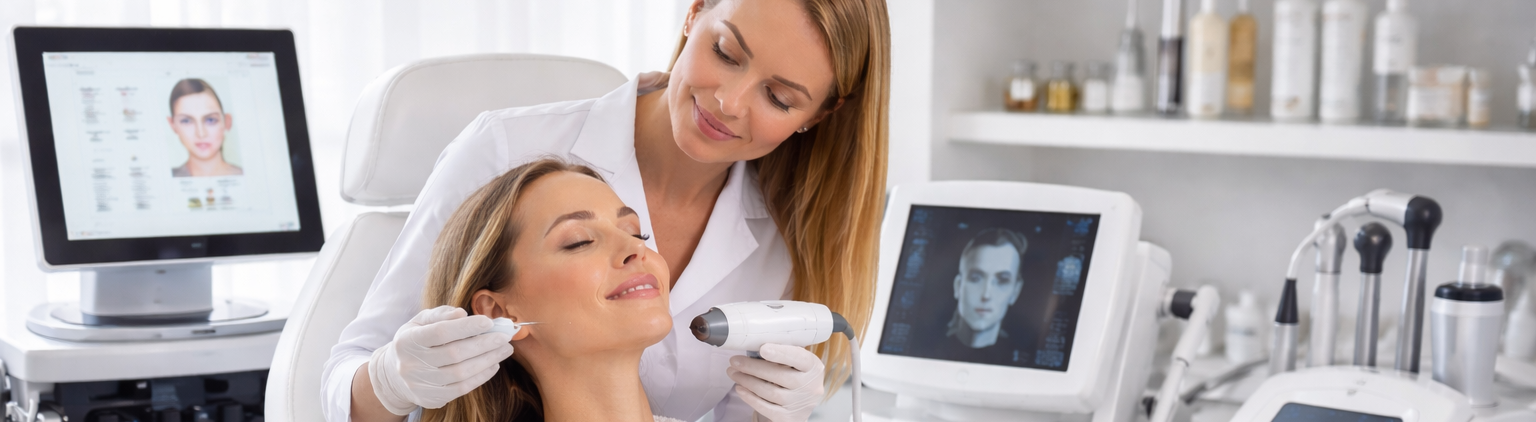
Aesthetic treatments: sustained growth, technological innovation and consolidation of the medium-aesthetic channel

The global market for aesthetic treatments has sustained expansion, changes in consumer behaviour and greater integration between health, well-being and personal image.

Signatures like Allergan Aesthetics and reports McKinsey and State they agree that the segment of non-invasive procedures leads growth, with rates above the average health sector.

Latin America accompanies this trend with its own dynamics, where access to technology, the professionalization of the sector and the digitization of the patient's experience begin to define the competitiveness of clinics and brands.

Expansion of non-invasive procedures

The focus of market growth is on minimally invasive treatments. Procedures such as botulinum toxin, dermal, laser and radio-frequency fillings concentrate the highest demand for their shorter recovery time and immediate results.

According to data from the International Society of Aesthetic Plastic Surgery, more than 60% of the aesthetic treatments at the global level correspond to this type of interventions. This pattern is replicated in emerging markets, where consumers prioritize accessibility, speed and lower clinical risk.

The standardization of medical protocols and the growing regulation of the sector raise entry barriers and promote the consolidation of investment-capable operators.

Technology like competitive driver

Technological innovation is the main factor of differentiation. Energy-based equipment (laser, focused ultrasound, cryolippolysis) evolve towards more precise, safe and personalized solutions.

Industry leaders invest in research and development to improve clinical effectiveness and reduce adverse effects. The incorporation of artificial intelligence in facial and body diagnosis allows the design of patient-friendly treatments, increasing the rate of conversion and fidealization.

Digitization also affects the customer's experience. Integrated management platforms allow post-treatment monitoring, shift automation and results analysis, generating operational efficiencies.

Change in consumer profile

The consumer of aesthetic treatments expands its demographic base. Sustained growth is observed in male segments and younger age ranges, especially in preventive treatments.

The influence of social networks and constant exposure to visual standards increase the demand for rapid and discreet procedures. Applications such as Instagram and TikTok function as key channels of social discovery and validation.

The purchase decision process is based on online reputation, testimonies and educational content. Clinics with solid digital strategy achieve greater uptake and retention of patients.

Integration with the health system

The sector is moving towards greater integration with traditional medicine. Medical-aesthetic clinics incorporate professionals from different specialties and expand their portfolio to dermatology, nutrition and integral well-being.

This approach increases the average ticket per patient and allows to build long-term relationships. It also promotes higher standards in safety, quality and traceability of treatments.

The regulation begins to accompany this process. In several Latin American countries, policy frameworks for controlling professional practice and the use of technology are strengthened, reducing informality and improving consumer confidence.

Investment and market consolidation

El interés de fondos de inversión y grupos internacionales crece de manera sostenida. El mercado muestra una fragmentación elevada, lo que genera oportunidades de consolidación a través de adquisiciones y expansión de redes.

Cadenas de clínicas estéticas avanzan en modelos escalables basados en marca, protocolos estandarizados y economías de escala en compra de insumos y tecnología.

En paralelo, el desarrollo de marcas propias de productos estéticos y cosmecéuticos permite capturar mayor valor en la cadena.

Strategic perspective

El mercado de tratamientos estéticos presenta una combinación de crecimiento, innovación y profesionalización que eleva su atractivo para operadores e inversores.

Las empresas que lideran el sector concentran su estrategia en cinco ejes:

  • Inversión continua en tecnología.
  • Construcción de marca y reputación digital.
  • Estandarización de procesos clínicos.
  • Expansión de servicios complementarios.
  • Escalabilidad operativa.

El entorno competitivo exige capacidad de adaptación a regulaciones, actualización tecnológica constante y una gestión integral de la experiencia del paciente.

En América Latina, el potencial de crecimiento se sostiene en la expansión de la clase media, el acceso a financiamiento y la creciente cultura de cuidado personal.

Slide

Evaluate a commercial diagnosis

Identify blocks and real opportunities for growth.


Longevity and welfare

The business of living more and better: the global expansion of the longevity and well-being market

The ageing of the global population is redefining the structure of multiple industries.

As life expectancy increases, there is also a growing demand for solutions aimed at extend healthy years of lifethe development of a new economic ecosystem: the longevity economy.

According to analysis from international organizations and consultants such as World Economic Forum and McKinsey & Company, the global market linked to well-being, preventive health and healthy ageing is rapidly expanding, combining advances in biotechnology, preventive medicine, nutrition, fitness and digital technology.

In this context, the health and beauty it begins to integrate with industries such as technology, pharmaceutical and well-being, leading to new investment opportunities and business models focused on longevity.

A rapidly expanding market

The sustained increase in life expectancy is one of the structural factors that explain the expansion of the longevity market. According to data from the World Health Organization, by 2050 the world population over 60 years of age will double, exceeding 2 billion people.

This demographic change is driving a growing demand for solutions that will enable to delay biological ageing, prevent chronic diseases and improve quality of life at advanced ages.

Within this emerging market, multiple segments converge:

  • Preventive medicine
  • Supplements and functional nutrition
  • Biotechnology applied to ageing
  • Fitness and integral welfare
  • Scientific cosmetics or "beauty longevity"
  • Digital health platforms

According to studies cited by Global Wellness Institute, the global welfare economy currently exceeds the US$ 6 billion, and the segment of longevity and healthy ageing is one of the most growing within the sector.

Technological and biotechnological innovation

One of the main drivers of this market is the acceleration of scientific innovation applied to ageing.

In recent years, research in areas such as:

  • Genetic therapies
  • regenerative medicine
  • Analysis of biomarkers
  • Artificial intelligence applied to diagnosis
  • Personalized medicine

has made progress in understanding the biological processes that determine ageing.

Research centres, biotech companies and startups are developing therapies aimed at slow cell deterioration and extend healthy life, a field known as longevity biotech.

According to MIT Technology Review analysis, global investment in longevity technology companies has grown significantly over the past five years, attracting capital from capital venture funds, large pharmaceutical companies and sovereign funds.

This convergence between science, technology and health is creating a new segment within the health industry that combines medical research with consumer-oriented business models.

The transformation of the beauty sector

The impact of longevity is also redefining the global beauty market.

Traditionally focused on aesthetics, industry is evolving towards a more scientific approach based on skin health, cell biology and integral well-being.

Companies in the sector are investing in:

  • Biotechnology based cosmetics
  • Genetic analysis for treatment personalization
  • Dermatological health products
  • Integration with nutrition and supplements

This approach, known as beauty from within, reflects a trend towards products that combine aesthetics with health.

According to Statista's analysis, the cosmetics —products that combine nutritional supplements with aesthetic benefits— shows one of the most accelerated growth within the global beauty industry.

The role of digitization in welfare

Digital transformation is also accelerating the development of the longevity market.

Mobile applications, wearable devices and digital health platforms allow consumers to monitor key variables such as:

  • Dream
  • Physical activity
  • Nutrition
  • Health Biomarkers

Such tools are driving a more preventive approach to health, where users make data-based decisions about their well-being.

The convergence between technology and health is creating a new ecosystem in which technology companies, digital health startups and welfare companies compete to capture part of this emerging market.

Strategic perspective for enterprises

The expansion of the longevity economy presents relevant strategic opportunities for multiple industries.

The main opportunities include:

1. Development of new market segments
Longevity is creating new categories of products and services aimed at older, but active, consumers with greater purchasing power.

2. Integration between health, technology and well-being
Companies that manage to integrate science, technology and consumer experience will have a competitive advantage in this market.

3. Innovation in business models
Well-being subscriptions, personalized health platforms and long-term clinics begin to appear as new business formats.

4. Market expansion in emerging economies
Although developed markets lead innovation, Latin America and Asia represent opportunities for growth due to demographic change and the increase in the middle class.

However, there are also relevant challenges:

  • Health regulation.
  • Scientific validation of products.
  • Pressure on health systems.
  • Growing competition between startups and big corporations.

The overall expansion of the longevity and well-being market reflects a structural transformation in the way societies address ageing.

Far from limited to a medical phenomenon, longevity is becoming a new axis of economic developmentwhich combines scientific innovation, well-being and business models focused on prevention.

In this context, companies operating in the health, beauty, technology and consumption sectors must adapt to an environment in which the quality of life and preventive health are consolidated as key demand factors.

Slide

Evaluate a commercial diagnosis

Identify blocks and real opportunities for growth.